


Last updated: October 1, 2026
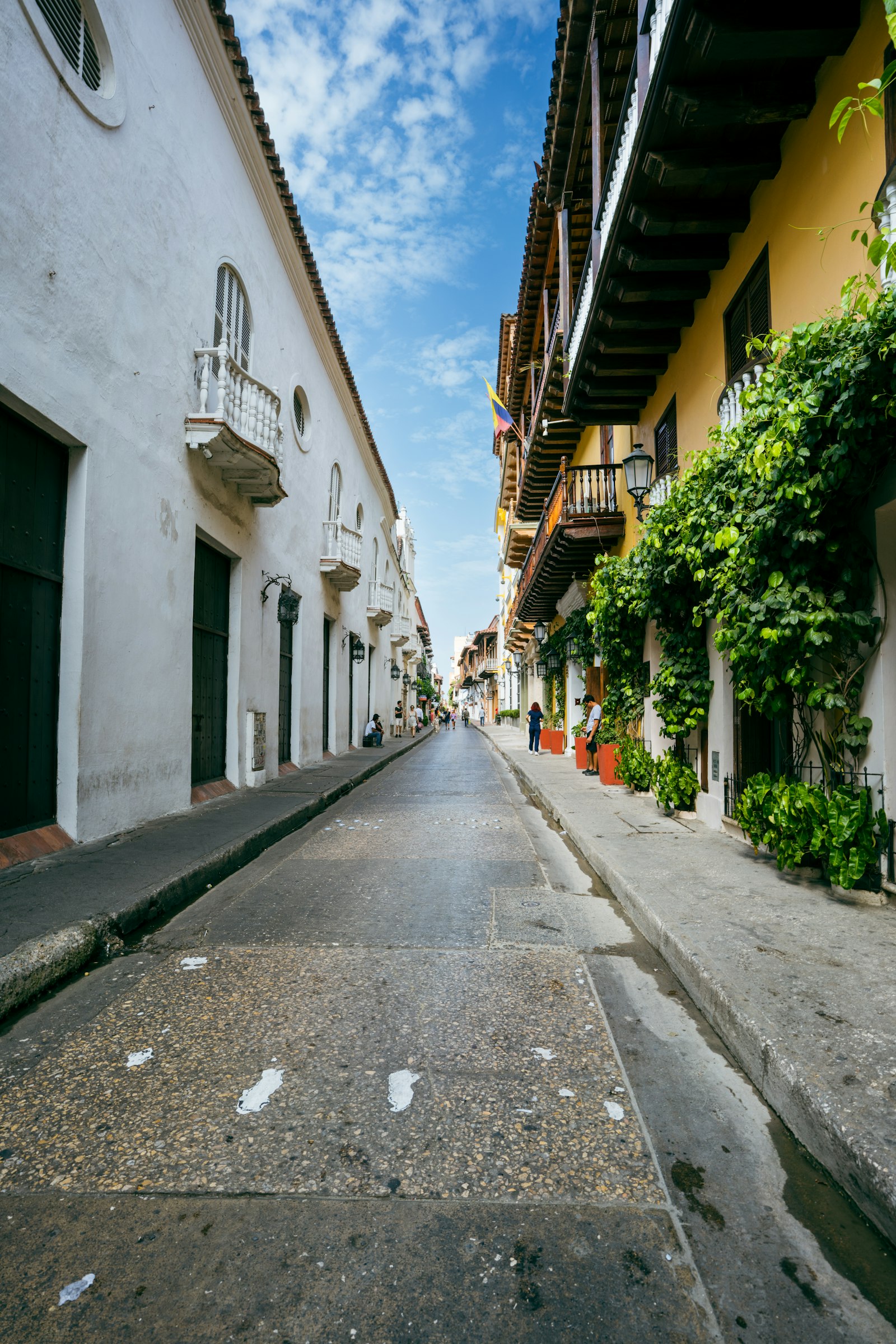
Cartagena’s Walled City streets change name almost every block, and each name holds a piece of history: Calle de la Amargura recalls the Inquisition’s prisoners, Calle de Don Sancho a hero of Bocachica, and Calle de las Damas a legend about a disguised king. You can walk them all in 2–3 hours, free of charge.
Quick facts
- Location: the San Pedro (Centro) and San Diego sectors, inside the walls of Cartagena de Indias.
- Getting there: taxi to the Clock Tower or Plaza de Santo Domingo; from Getsemaní, walk across the Camellón de los Mártires.
- Best time: 7–10 a.m. (less heat, empty streets for photos) or from 4 p.m., when the street lamps come on.
- Approximate budget: walking is free; museums on the route COP 24,000–30,000 (≈ USD 7.50–9.50) per person; water and a street juice COP 3,000–6,000 (≈ USD 1–2).
- Time needed: 2–3 hours for streets and façades; half a day if you go into one or two museums.
Approximate conversion at COP 3,200 per USD (September 2026).
Why do Cartagena’s streets have such unusual names?
Officially, the Walled City uses the modern grid of calles and carreras (the History Museum, for example, is at Carrera 3 #33-46). But no local will give you directions that way. Inside the walls, each stretch between two corners keeps its colonial name, and many are shown on ceramic plaques on the façades. That’s why the same street can have three different names in five blocks.
The origins mix archival records and oral tradition. Some names honor governors and soldiers; others recall trades, vanished buildings or Inquisition episodes. And some are pure legend, told in several contradictory versions. Local chroniclers such as Juan Gossaín, writing in El Tiempo, have been collecting them for decades. Here are the best known, with what’s documented kept apart from what’s simply told.
Which are the most iconic streets and what stories do they hide?
Calle de las Damas (Street of the Ladies)
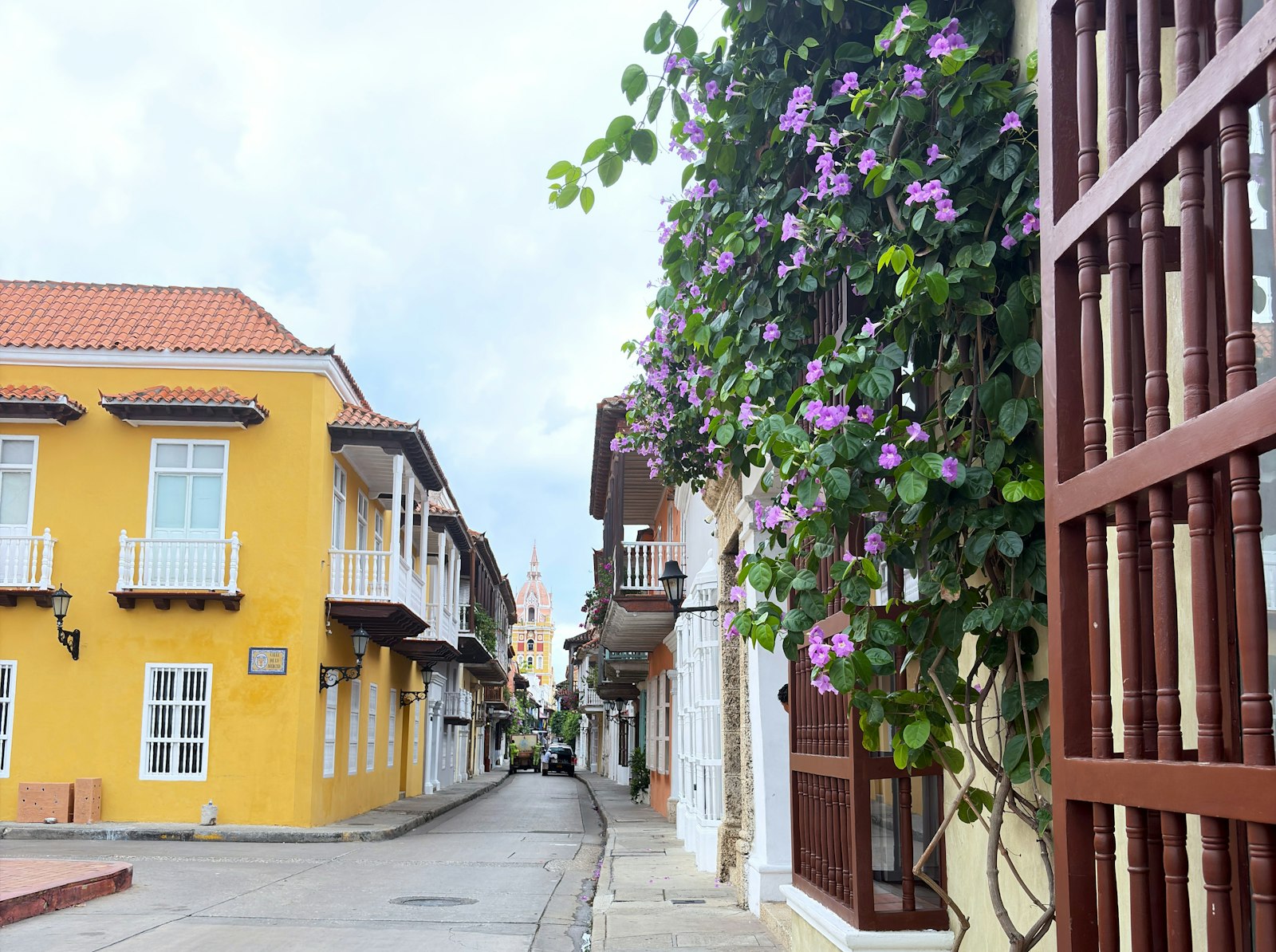
Probably the Walled City’s most famous street name, with its least likely legend. According to the tradition reported by El Tiempo, a Spanish king wanted to see the finished walls for himself and travelled incognito, disguised as a woman along with his companions; the place where they stayed became “of the Ladies”. Other versions change the king and the century. No document backs it up, but the story lives on in every guided tour. It was previously called Calle de Nuestra Señora de los Ángeles.
Calle de la Amargura (Street of Bitterness)
This one has a date. On June 17, 1626, during an Inquisition auto-da-fé, prisoners Pedro Sánchez and Amaro Gómez were led along this street. The chronicle says Sánchez declared it would become “the road of bitterness”; he was sentenced to the galleys and life imprisonment. The street has been linked ever since to the route of the accused toward the Holy Office tribunal, whose palace you can visit today on Plaza de Bolívar.
Calle de los Siete Infantes (Street of the Seven Infants)
Two legends compete. In one, a local woman gave birth to seven children at once and the king rewarded her for each. In the other, seven brothers died at the port defending their sister’s honor. Pick your favorite: both are told with equal conviction.
Calle de Don Sancho
It honors General Sancho Jimeno de Orozco, the Spanish officer who defended Bocachica Castle during the Baron de Pointis’ attack in 1697 — a good example of how the city named its streets after its defenders.
Calle de la Factoría and the Marquis of Valdehoyos House
Formerly Puerto Escondido, the street took its name from a factoría, a trading house that sold everyday goods and made tallow candles. It’s home to one of the Walled City’s grandest mansions, the Casa del Marqués de Valdehoyos, built in 1765. According to Colombia’s Foreign Ministry, the family held a Crown privilege to import flour and enslaved people, and the ground floor served as warehouse and office. Simón Bolívar stayed there in 1830. Today it’s an official guesthouse of the Foreign Ministry, so you’ll usually admire it from outside: look for its long wooden balcony.
Calle del Tablón (Plank Street)
It had two earlier names: Nuestra Señora de los Valles and Calle de la Imprenta, after the city’s first printing press. The current name has two explanations: the first victim of an epidemic or — the most repeated version — the wooden plank neighbors laid across the street on rainy days to get from one sidewalk to the other.
Callejón de los Estribos (Buttress Alley)
Next to Santo Domingo Church. When the building began showing structural problems, the Dominicans reinforced its walls with buttresses, called estribos. Look closely: they explain both the name and the church’s massive silhouette.
Calle del Curato (Parsonage Street)
Named after the parish priests’ house next to Santo Toribio Church. Gabriel García Márquez’s house stands on this street; it’s a private residence you can only see from outside.
Calle de Baloco and the Badillo streets
Two governors’ names. Baloco recalls Francisco Baloco Leigrave, governor of Cartagena in 1716; Primera and Segunda de Badillo honor Juan de Badillo, who governed in 1536 and even jailed the city’s founder, Pedro de Heredia.
More streets with a story: Estanco del Aguardiente, Coliseo and Tumbamuerto
- Estanco del Aguardiente: site of the colonial estanco, the office that controlled the sale of liquor and tobacco.
- Calle del Coliseo: recalls an old coliseum used for theater performances.
- Tumbamuerto (“Corpse-Tipper”): during an epidemic, funeral processions used this uneven street and, the chronicle says, more than one coffin ended up on the ground.
Which buildings and monuments should I see along these streets?
If you’ve read our complete Cartagena walled city guide, you already know the big museums. Here we focus on the buildings that give the streets their character, including some most visitors walk straight past.
Clock Tower and Plaza de los Coches
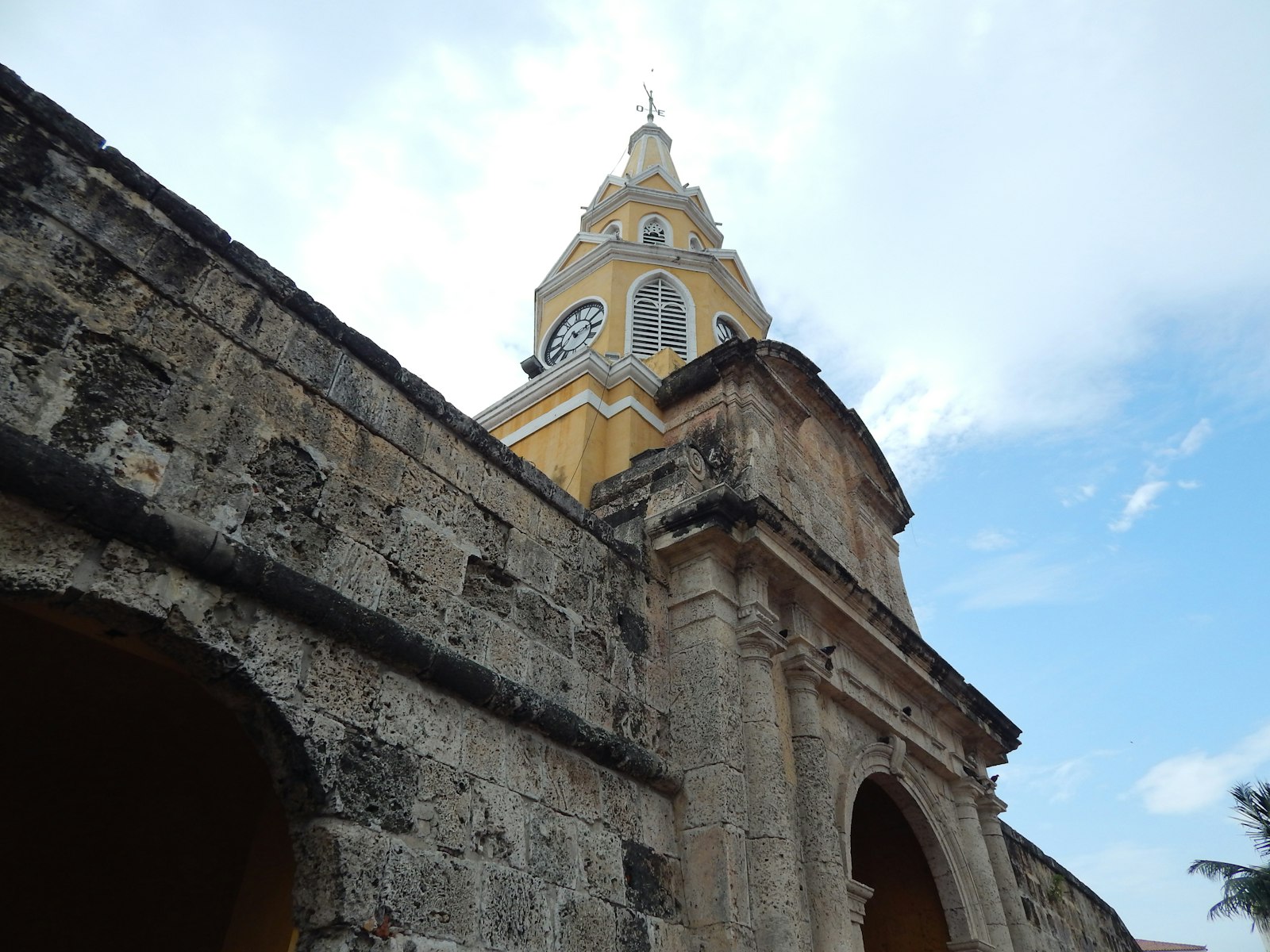
The old Puerta del Puente (1631) linked the city with Getsemaní; the clock that names it came later. Walk through and you reach Plaza de los Coches, with the statue of Pedro de Heredia and the Portal de los Dulces, where vendors sell cocadas and alegrías.
Plaza de la Aduana and the Customs House
The Walled City’s largest square. It got its name in 1790, when the customs administration moved in; before that it was known as the Royal Accounting Office square. The Casa de la Aduana now houses City Hall. In the middle stands the Christopher Columbus statue, unveiled on October 12, 1894.
Santo Domingo Church and Square
The Dominican church dates from the 16th century and was the friars’ home until the 19th. Inside is the Cristo de la Expiración, a wooden crucifix wrapped in legend: the craftsman who carved it is said to have vanished once he finished. Its baroque altar dates from 1807, by Cartagena-born artist Hermenegildo José de Ayala, and every September 14 a replica is carried in procession. Outside, the square is the liveliest in the Walled City, with café terraces and Fernando Botero’s reclining woman, nicknamed “La Gorda Gertrudis”.
Church of Santo Toribio de Mogrovejo
On the corner of Fernández de Madrid park, it was begun in 1666, one of the last colonial churches built. It keeps a cannonball that crashed into the church in 1741 in the middle of Mass (during Admiral Vernon’s siege), the city’s only baroque altarpiece according to Colombia Travel, and colonial murals.
Plaza de la Proclamación and the Casa del Cabildo
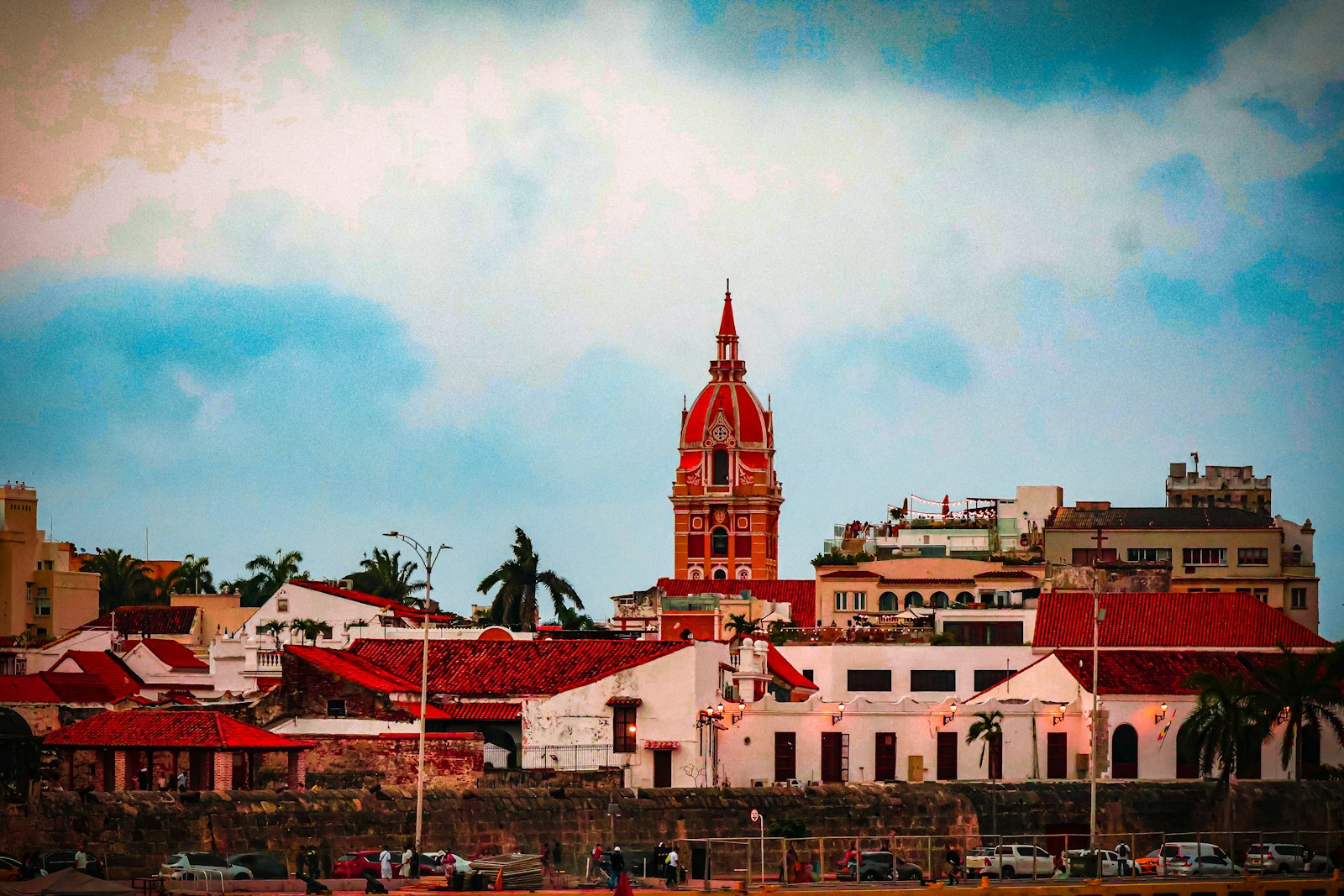
Facing the Walled City council building and beside the Cathedral, this square hosted official proclamations and, above all, November 11, 1811, when the people gathered to back Cartagena’s Declaration of Independence. A city plaque marks the spot — a must if you visit during the Independence Festivities.
Claustro de La Merced
A cultural venue of the University of Cartagena (Carrera 4 #38-40). Gabriel García Márquez’s ashes rest in its courtyard. Admission is free, Monday to Friday, 8 a.m.–5 p.m.; closed on weekends.
Adolfo Mejía Theater (former Teatro Heredia)
The city’s grand theater turned 114 in 2025 and reopened after restoration in 1998, named after composer Adolfo Mejía. In January 2026 El Universal reported it would undergo structural work, the first major intervention in 28 years, paused during festivals. Check before going whether there are visits or shows; its art gallery last published hours of 10 a.m.–12 p.m. and 2–5 p.m.
Caribbean Naval Museum
At Calle San Juan de Dios #3-62, in a colonial building by the wall. It tells the story of the sieges and the city’s sea defenses — the perfect companion to understand why so many streets bear soldiers’ names.
| Place | Address | Hours | Adult ticket |
|---|---|---|---|
| History Museum (Palace of the Inquisition) | Carrera 3 #33-46, Plaza de Bolívar | Mon–Sat 9:00–18:00; Sun 10:00–16:00 | COP 24,000 (≈ USD 7.50) |
| Caribbean Naval Museum | Calle San Juan de Dios #3-62 | Daily 10:00–18:00 | COP 24,000 (≈ USD 7.50) |
| San Pedro Claver House Museum | Carrera 4 #30-01, Plaza San Pedro Claver | Mon–Fri 9:00–16:30; Sat–Sun 10:00–16:00 | COP 30,000 international (≈ USD 9.50); COP 21,000 Colombians |
| Zenú Gold Museum | Carrera 4 #33-26, Plaza de Bolívar | Tue–Sat 9:00–17:00; Sun 9:00–14:00 | Free |
| Claustro de La Merced | Carrera 4 #38-40 | Mon–Fri 8:00–17:00 | Free |
| Streets, squares and walls | Whole Walled City | Always open | Free |
What’s the best self-guided walking route through the iconic streets?
This route covers the essentials in about 2–3 hours at an easy pace. Keep a map on your phone: names change from one corner to the next.
- Clock Tower and Plaza de los Coches: start early and try a sweet at the Portal de los Dulces.
- Plaza de la Aduana: the Columbus statue and the Customs House.
- Plaza de San Pedro Claver and Calle San Juan de Dios: if you pick one museum, make it the Sanctuary or the Naval Museum.
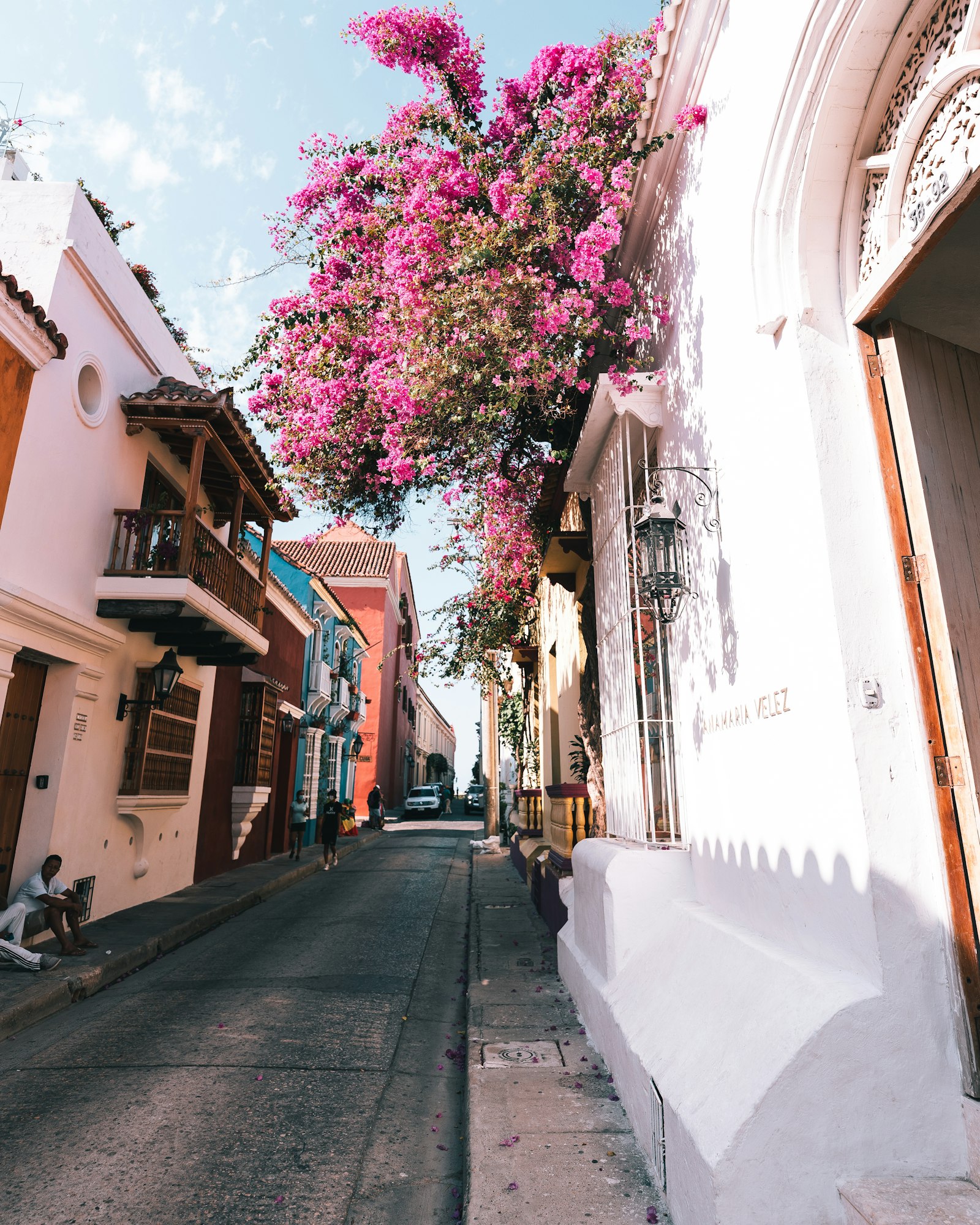
- Calle de Baloco and Calle de las Damas: balconies, bougainvillea and the disguised-king legend.
- Plaza de Santo Domingo and Callejón de los Estribos: spot the buttresses and say hi to Botero’s sculpture.
- Calle de la Factoría: the façade of the Marquis of Valdehoyos House.
- Plaza de la Proclamación and Plaza de Bolívar: Cathedral, Palace of the Inquisition and Gold Museum.
- Claustro de La Merced and Adolfo Mejía Theater: the García Márquez memorial.
- Calle del Curato and Santo Toribio: finish at Fernández de Madrid park and carry on into the San Diego neighborhood.
Where can I eat along the route?
The route runs through the city’s densest restaurant area. For a booked lunch or dinner, see our pick of where to eat in Cartagena’s Old Town. For something quick, a fresh juice or an arepa de huevo from a street stand costs little — always ask the price first. Our guide to must-taste dishes in Cartagena explains what to order.
What should I watch out for when walking the Walled City?
- Heat: walk early or late afternoon; bring water, a hat and sunscreen. October is usually the rainiest month: downpours are heavy but short.
- Impromptu “guides”: if someone starts telling you a street’s history as you walk, agree on a price first or say “no, gracias”. Look for licensed guides or an organized free tour.
- Posted prices: since 2024 a city decree requires prices in pesos with taxes included. If there’s no price, don’t order.
- Horse-drawn carriages: agree on fare and route before getting in.
- Private houses: the Valdehoyos mansion and García Márquez’s house aren’t museums — respect the occupants.
- Churches: they’re active places of worship; avoid entering during Mass and dress respectfully.
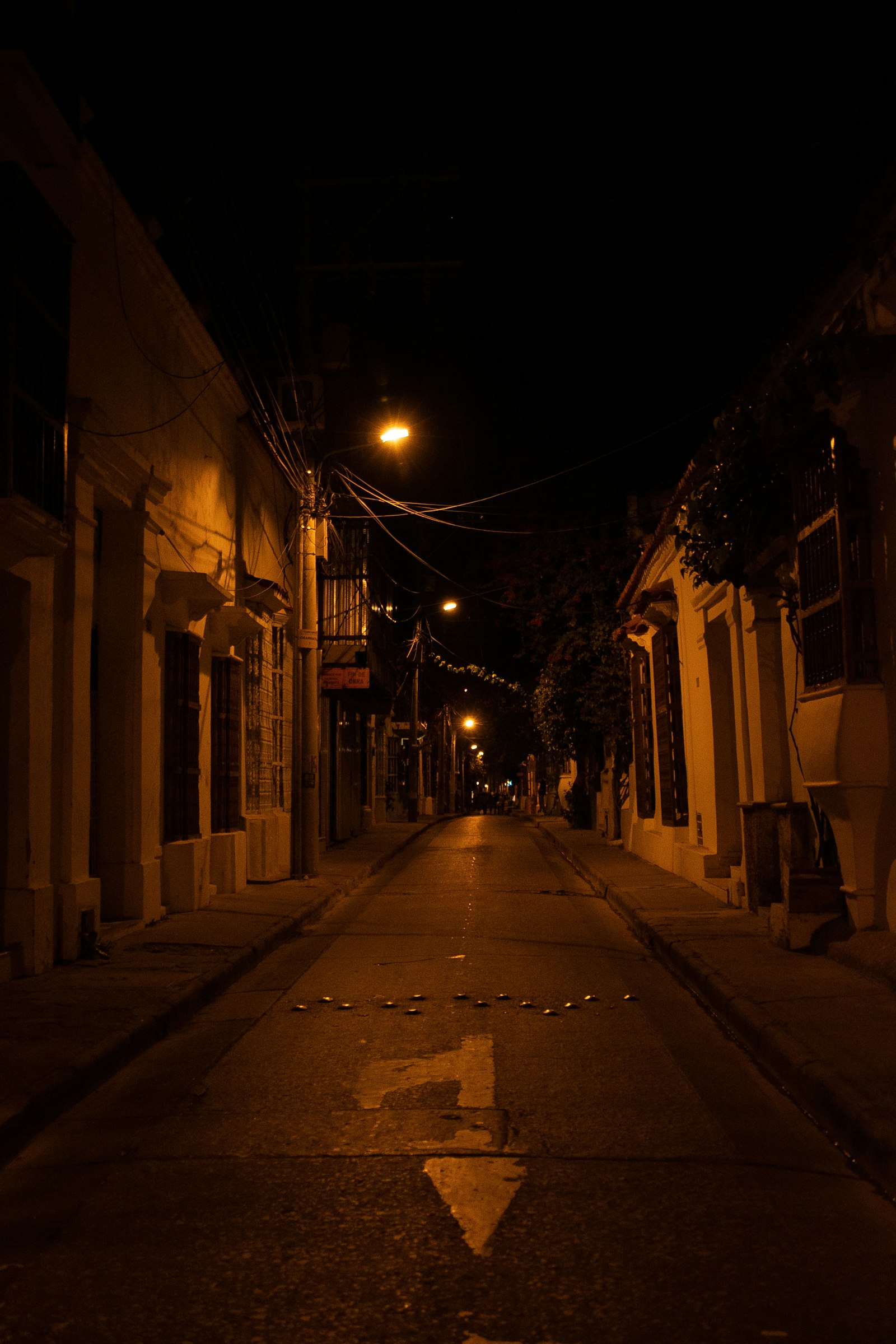
- Valuables: in busy squares keep your phone away and use a cross-body bag; at night stick to lively streets.
- Mondays: several museums close (the Gold Museum, for instance).
Cartagena Walled City streets FAQ
Why is it called Calle de las Damas?
Because of a legend: a Spanish king supposedly travelled incognito, disguised as a woman, to see the finished walls. There’s no documentary evidence; it was previously called Calle de Nuestra Señora de los Ángeles.
How much does it cost to explore the Walled City streets?
Nothing: streets, squares and walls are free. You only pay for museums, COP 24,000–30,000 per adult; the Gold Museum and Claustro de La Merced are free.
How long does the walking route take?
2–3 hours for streets and façades only; half a day if you visit one or two museums.
Where are Gabriel García Márquez’s ashes?
At the University of Cartagena’s Claustro de La Merced (Carrera 4 #38-40), open free Monday to Friday, 8 a.m.–5 p.m.
Can I visit the Marquis of Valdehoyos House?
Usually not: it’s an official guesthouse of Colombia’s Foreign Ministry. Admire it from Calle de la Factoría.
What happened at Plaza de la Proclamación?
On November 11, 1811, the people gathered there to back Cartagena’s Declaration of Independence.
Sources
- El Tiempo – Las calles que nunca callan (1997, Spanish)
- El Tiempo – Juan Gossaín on Cartagena’s curious street names (2019, Spanish)
- Al Día News – Streets of Cartagena
- Colombian Foreign Ministry – Casa del Marqués de Valdehoyos (Spanish)
- Colombia Travel – Church of Santo Toribio de Mogrovejo
- El Universal – The Cristo de la Expiración (Spanish)
- EcuRed – Plaza de la Aduana (Spanish)
- HMdb – Plaza de la Proclamación marker
- El Universal – Adolfo Mejía Theater structural works (2026, Spanish)
- El Universal – Cartagena museum route 2026 (Spanish)


