


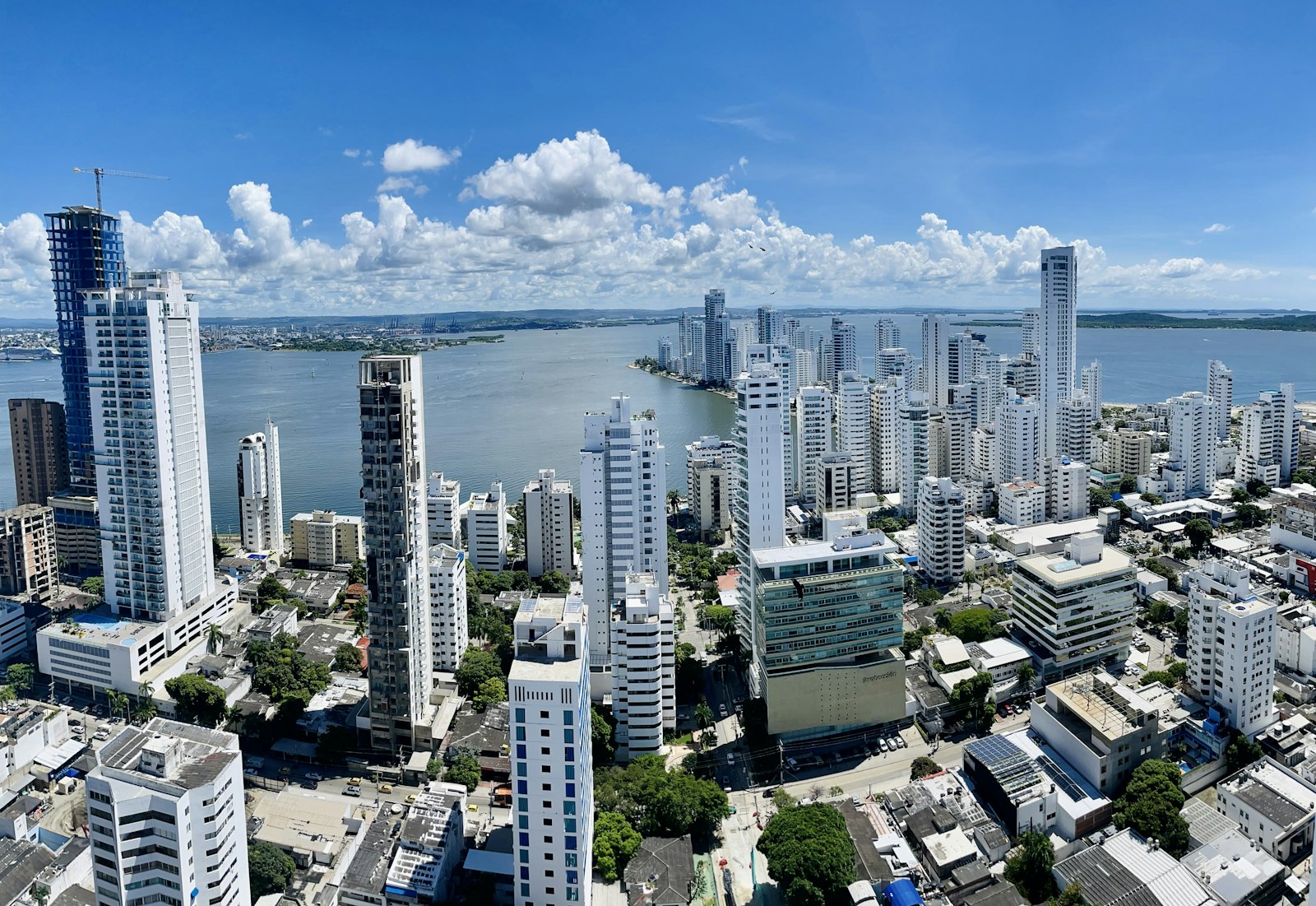
Bocagrande is Cartagena’s high-rise peninsula on the Caribbean, about 2 km from the Old Town. It’s the neighborhood of the city beach, big hotels, Avenida San Martín and the historic 1945 Hotel Caribe. Stay here if you want the beach on your doorstep and the walled city ten minutes away by taxi.
Last updated: October 13, 2026. Prices, hours and the status of the beach works were checked against the sources listed at the end; confirm them before you go.
Quick facts
- Location: a peninsula southwest of the Old Town, between the Caribbean Sea and Cartagena Bay; El Laguito sits at its tip.
- Getting there: taxi from the Old Town (5-10 min, minimum fare COP 12,250, about USD 3.80), Transcaribe bus (COP 3,900, USD 1.20) or on foot, about 20 minutes from the Clock Tower.
- Best time: beach from 7 to 10 a.m.; a stroll around El Laguito and along Carrera 1 at sunset (around 5:30 p.m.).
- Rough budget: double beach tent with 4 chairs, COP 30,000 max (USD 9) under the official reference price list; beach-style lunch, COP 20,000-30,000 (USD 6-9); the restaurants below range from mid to high-end ($$-$$$$ on Tripadvisor).
- Time needed: half a day to get to know it; ideal as a base for 3-5 nights.
What is Bocagrande and what makes it special?
If the Old Town is Cartagena’s world of colonial balconies, Bocagrande is its counterpoint: a built-up sandbar of apartment towers with the beach right outside the hotel, plus supermarkets, banks, casinos and restaurants that stay open late. Families and travelers who want sea and city without renting a car tend to stay here.
The highlights in a nutshell: the city’s biggest and most accessible urban beach, Caribbean sunsets from Carrera 1, the landmark Hotel Caribe, a walk around the El Laguito lagoon and a food scene that runs from street-cart ceviche to Nikkei cuisine. Its weak spot, pushy beach vendors, is easy to handle with the tips further down.
What is the history of Bocagrande?
The name means “big mouth”: the wide natural entrance to the bay that once lay between this peninsula and Tierrabomba island. In the 18th century Spanish military engineers sealed it with an underwater breakwater, forcing ships to enter through the easier-to-defend Bocachica channel. For centuries the peninsula was little more than sand and icaco bushes, hence its old name, Punta Icacos.
According to local chronicler Alberto H. Lemaitre, quoted by El Universal, around 1925 there was only a fishing hamlet at the end of the peninsula, where the Hilton stands today. The city council later sold the land to the Andian National Corporation, the American oil pipeline company, which developed the neighborhood for its staff, with houses along the seafront and Avenida San Martín laid out through the middle. The fishermen were moved to Tierrabomba.
The turning point came on December 30, 1945, when the Hotel Caribe opened. It is considered the first hotel built in Cartagena and the start of the city’s beach tourism. Over the following decades came the high-rises that now form the most photographed skyline on Colombia’s Caribbean coast.
What are the best things to do in Bocagrande?
An early swim at Bocagrande beach
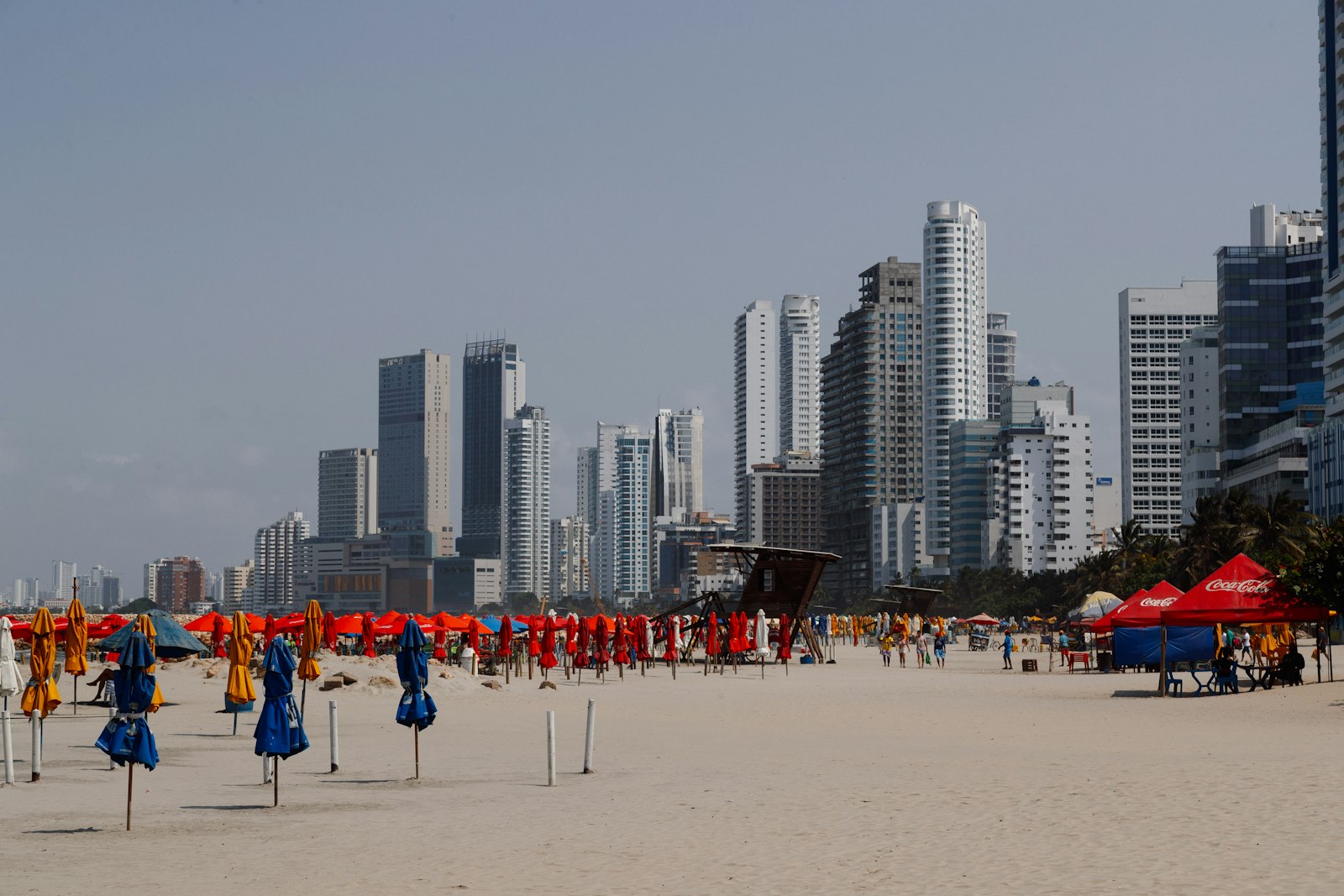
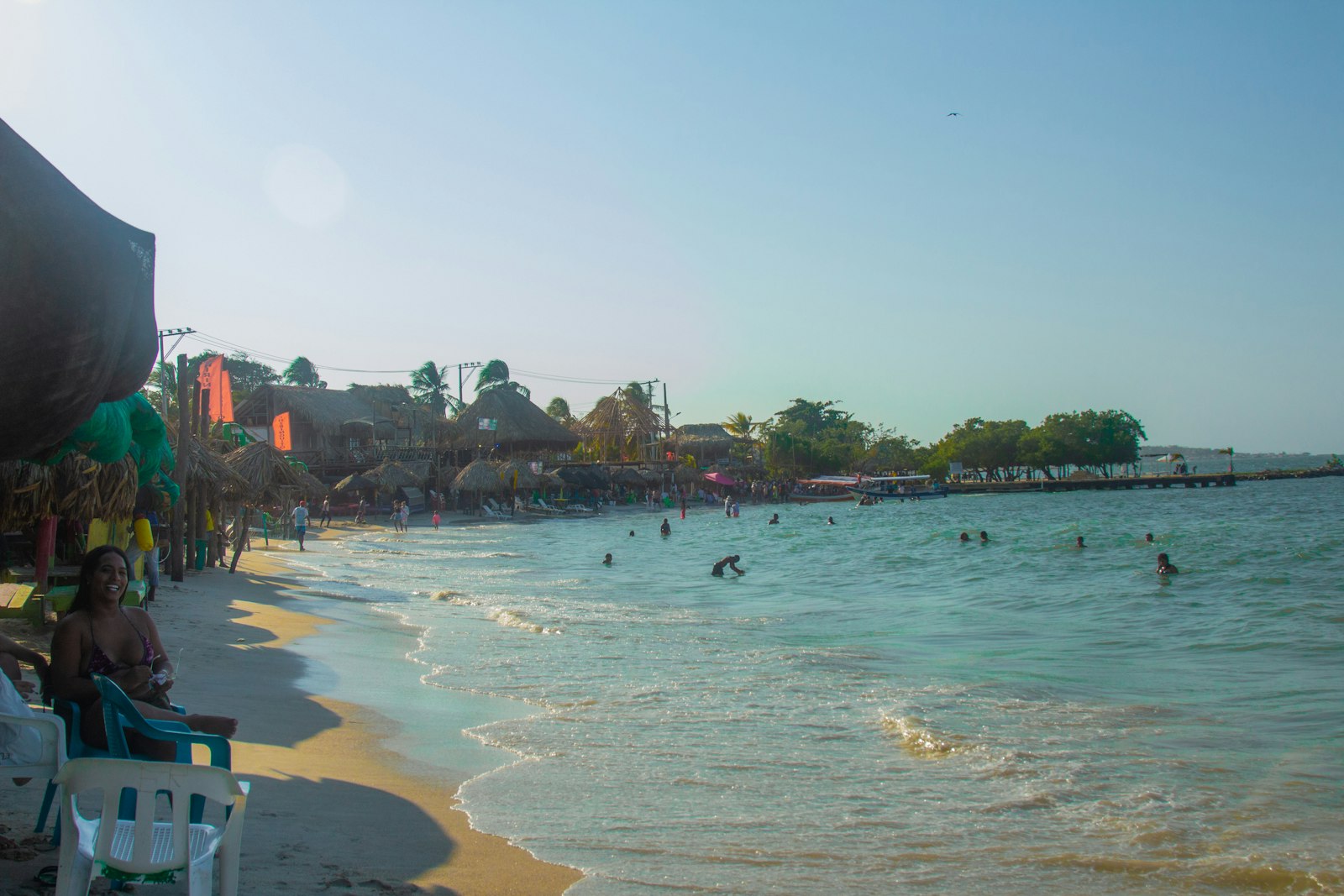
The beach runs along the whole north side of the peninsula. Go early: the water is calmer, the sand isn’t scorching yet and there are fewer vendors. Only rent a tent once you’ve agreed on the price, and pay at the end, not up front.
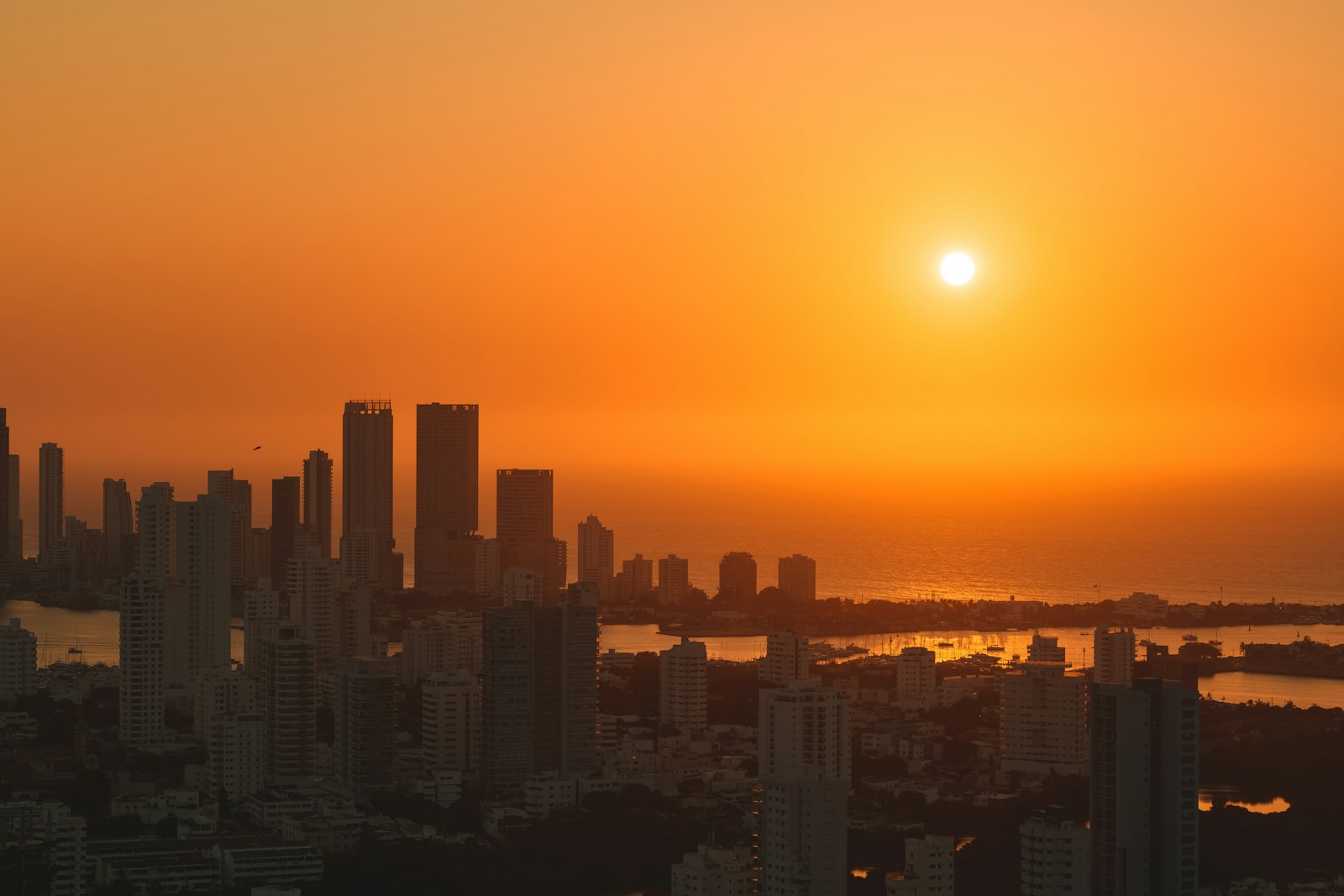
A sunset walk around El Laguito
At the tip of the peninsula, El Laguito wraps around a small lagoon where, late in the afternoon, you’ll see fishermen, kids flying kites and an orange sky mirrored on the water. Its beach, in front of several large hotels, is the go-to spot for jet skis and banana-boat rides.
Shopping and coffee on Avenida San Martín
This is the neighborhood’s main street: brand stores, handicrafts, pharmacies, currency exchange, ice-cream parlors and cafés for a fresh fruit juice or an empanada. The Plaza Bocagrande and Nao shopping centers are the perfect escape in the hottest hours or when it rains.
Use Bocagrande as a base for day trips
From here you’re minutes from the Old Town and Getsemaní, and about an hour by boat from the Rosario Islands or Barú, where the water is far clearer. Many travelers pair beach mornings here with afternoons inside the walls.
Which buildings and landmarks should I see?
Hotel Caribe (1945)
Designed by Cuban architect Manuel Carrerá in a neoclassical Antillean style, it was built between 1939 and 1945 and opened with 5 floors and 87 rooms. It hosted the 1947 National Beauty Pageant and, in 1960, the birth of the Cartagena International Film Festival. It has been a protected heritage site (Bien de Interés Cultural) since 1999. The original building, with its colonial-style tower, is best admired from Carrera 1.
El Laguito and the Hilton
The Hilton occupies the site of the old fishing village at the very tip of the peninsula and usually hosts the National Beauty Pageant contestants in November. The lagoon-side setting is pleasant for a walk.
La Palenquera sculpture
A work by sculptor Hernando Pereira honoring the fruit sellers of San Basilio de Palenque, located at the entrance to Bocagrande on the Paseo del Pescador. It was removed in 2023 for maintenance works; ask at your hotel whether it’s back in place.
Castillogrande, the quiet neighbor
To the south, across Avenida Chile, Castillogrande is residential and calm, with a bayside promenade next to the Club Naval. It’s a lovely place for an early-morning walk or jog.
What are the main streets in Bocagrande?
- Carrera 1: the road along the beach, lined with seafront hotels and buildings.
- Avenida San Martín (Carrera 2): shops, restaurants and relaxed nightlife.
- Carrera 3: the parallel street on the bay side, home to restaurants such as Árabe Internacional and 7 Cielos.
- Numbered calles: cross streets running from bay to sea that make it easy to get your bearings; Calle 10, near the Naval Base, links to the exit toward the Old Town.
- Avenida Chile: on the bay between Bocagrande and Castillogrande, currently under construction.
Where to eat in Bocagrande?
We picked well-rated restaurants from Tripadvisor (its “near Playa de Bocagrande” page, checked on October 13, 2026) with a verified address in the neighborhood. Ratings change daily, so treat them as a guide. For more options citywide, see our list of the best restaurants in Cartagena.
| Restaurant | Cuisine | Price | Address | Why go |
|---|---|---|---|---|
| Kazabe | Caribbean and Colombian | $$$$ | Cra. 2 #6-195 | Posta cartagenera, seafood cazuela and mote de queso; 4.9 (901 reviews) |
| 7 Cielos Rooftop | Caribbean and Peruvian | $$$$ | Cra. 3 #10-59, 6th floor | Sunset terrace; 4.9 (1,893 reviews) |
| Kannú (InterContinental) | Seafood and international | $$$$ | Cra. 1 #5-01 | Chef-driven cooking by the sea; 4.9 (692 reviews) |
| Hamachi | Nikkei (Japanese-Peruvian) | $$-$$$ | Cl. 8 #2-36 | Sushi and tiraditos; 4.7 (422 reviews) |
| Restaurante Árabe Internacional | Arab-Lebanese | $$$$ | Cra. 3 #8-83 | A classic since 1965; 4.4 (363 reviews) |
Kazabe: classic Cartagena cooking
If you want traditional coastal food without heading to the Old Town, this is the place: seafood cazuela, posta cartagenera (beef braised in a dark, sweet sauce), mote de queso and carimañolas. Open Monday to Saturday, noon to 9 p.m., closed Sundays, according to its Wanderlog listing. See photos of the place.
7 Cielos Rooftop: sunset with a cocktail
On a sixth floor on Carrera 3, it mixes Caribbean plates, Peruvian ceviches and cocktails. Opens at 5 p.m. (until midnight Sunday to Thursday and until 1 a.m. on Friday and Saturday, per OpenTable). Book ahead if you want an edge table for sunset. See photos of the place.
Kannú: luxury-hotel dining
The InterContinental’s restaurant pairs Colombian ingredients with contemporary techniques and, according to the hotel, has been named best luxury hotel restaurant three years in a row. A good pick for a special dinner with sea views.
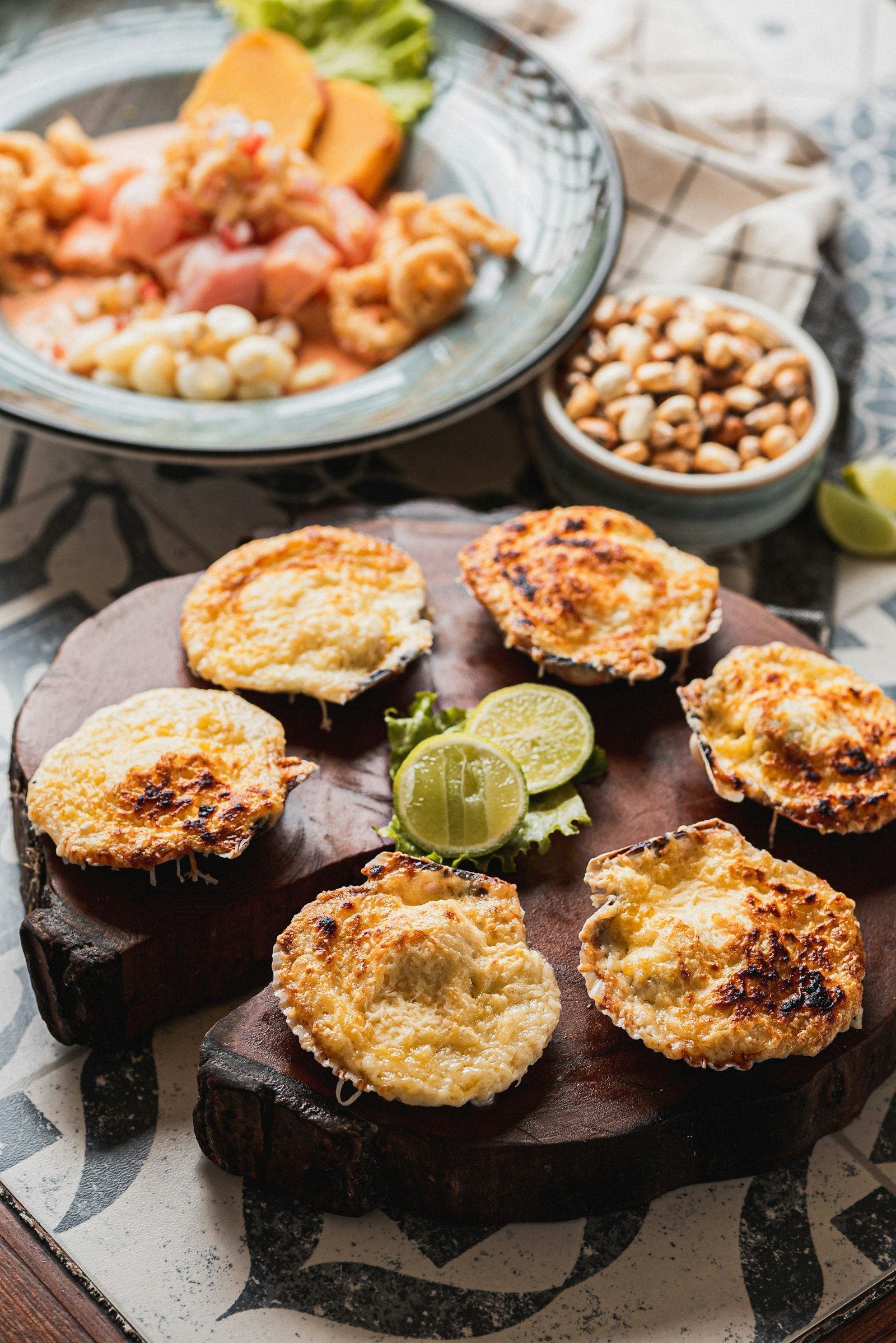
Hamachi: Nikkei on Calle 8
Sushi, tiraditos and Peruvian-Japanese fusion at mid-range prices. Open for lunch and dinner every day, with all-day service on Saturdays (check its listing before you go).
Restaurante Árabe Internacional: a tradition since 1965
Founded in 1965 by Syrian-born Georgette Saker de Farah and her husband Alfredo Farah, it’s a symbol of the Syrian-Lebanese influence on Colombia’s Caribbean coast. Order the mixed platter (kibbeh, stuffed vine leaves, almond rice) or the Lomo al Faraón, the founder’s own creation. Portions are generous.
Street food: the beach is full of ceviche carts, cut fruit and chilled coconuts; always ask the price before saying yes. Our Cartagena food prices 2026 table shows what’s reasonable.
Are there beaches in Bocagrande, and what are they like in 2026?
Yes. Bocagrande has Cartagena’s busiest city beach, with golden-grey sand and warm water, divided into numbered sections (Playa 1 to Playa 5) from Playa Hollywood, in front of the Hotel Caribe, to the beach opposite the Plaza Bocagrande mall. Don’t expect turquoise water: that’s what the islands are for.
The big news is the Cartagena Coastal Protection Project: using groynes and sand fill, Colombia’s disaster-risk agency (UNGRD) handed over Playa 3 in August 2025 and Playa 2 on September 6, 2026, now 360 meters long and more than 50 meters wide, roughly 30 meters wider than before. Phase 1 is due to finish in April 2027, so some stretches may still have machinery or closed access points.
How do I get to and around Bocagrande?
- Taxi: the minimum fare in 2026 is COP 12,250, plus a COP 1,100 night surcharge from 7 p.m. to 5 a.m. Taxis don’t use meters, so agree on the fare before getting in.
- Transcaribe: COP 3,900 per ride since January 23, 2026, with routes linking Bocagrande and the Old Town.
- On foot: about 20 minutes from the start of Bocagrande to the Clock Tower, skirting the Naval Base. Do it in daylight and bring water.
- Roadworks: the “4 en 1” anti-flooding project in Bocagrande and Castillogrande (31% complete in September 2026) keeps detours on Carrera 3, Calle 10 and Avenida Chile. Allow a few extra minutes.
Is Bocagrande safe? Scams, weather and what to watch out for
Bocagrande is one of the city’s most heavily policed areas, and by day you can explore it with normal precautions. Here’s what to keep in mind:
- Pushy vendors: in April 2026 a Chilean couple went viral complaining about nonstop approaches on the beach (massages, drinks, jet skis). A firm “no, gracias” works; never accept anything offered “for free”, because it will end up on your bill.
- Overcharging: ask the price of tents, oysters, cocktails and massages before you accept, and get it confirmed. The official reference list caps a double tent with 4 chairs at COP 30,000; if you’re overcharged, report it to the Tourist Police.
- Sea and flags: follow the flags and lifeguards; from December to March the trade winds whip up the waves. Swim only in marked zones, away from boats and jet skis.
- Heat: temperatures regularly top 30 °C (86 °F). Stay out of the sun between 11 a.m. and 3 p.m.
- Rain: October and November are the wettest months, and Bocagrande’s streets flood during heavy downpours. Wait for the water to drain before heading out.
- At night: leave jewelry at the hotel, keep your phone out of sight on the beach and take a taxi or ride-hailing app after midnight.
- Emergencies: dial 123.
For more advice, read our guide Is Cartagena safe?
Bocagrande FAQ
Is it safe to stay in Bocagrande?
Yes, it’s one of Cartagena’s most heavily policed areas. The usual problems are overcharging and pushy beach vendors, not violent crime. At night, get around by taxi.
Can you walk from Bocagrande to the Old Town?
Yes, it’s about 20 minutes from the start of Bocagrande to the Clock Tower, and longer from El Laguito. Given the heat, go early or at sunset; by taxi it’s 5-10 minutes.
Is Bocagrande beach nice for swimming?
It’s convenient and practical, with golden-grey sand and warm water, but not crystal clear. For turquoise water, head to the Rosario Islands, Barú or Playa Blanca, about an hour by boat.
How much does a beach tent cost in Bocagrande?
The official reference list sets a maximum of COP 30,000 for a double tent with 4 chairs and COP 15,000 for a single one with 2 chairs. Always agree on the price first.
Is there construction on Bocagrande’s beaches in 2026?
Yes. The Coastal Protection Project has already delivered wider Playas 2 and 3 and plans to finish phase 1 in April 2027. Some stretches may still have machinery.
What local food should I try in Bocagrande?
Shrimp ceviche, fried fish with coconut rice and patacones, posta cartagenera and, thanks to the Syrian-Lebanese heritage, kibbeh and almond rice at Árabe Internacional.
Sources
- El Universal: Bocagrande, an untold history (2020, in Spanish)
- El Bolivarense: history of the Hotel Caribe (in Spanish)
- El Tiempo: Hotel Caribe turns 70 (2015, in Spanish)
- El Universal: the new Playa 2 in Bocagrande (09/06/2026)
- Primer Tiempo: coastal protection due April 2027 (10/08/2026)
- El Universal: anti-flooding works in Bocagrande (09/14/2026)
- El Universal: 2026 taxi fares
- El Universal: 2026 Transcaribe fare
- Semana: what a beach day costs in Cartagena (2024)
- Vanguardia: tourists report vendor harassment in Bocagrande (04/21/2026)
- El Universal: 60 years of Restaurante Árabe Internacional (2025)
- Tripadvisor: restaurants near Playa de Bocagrande (checked 10/13/2026)


