


Last updated: October 4, 2026
Cartagena’s walled Old Town is the most heavily policed part of the city, and you can explore it on foot with peace of mind if you take basic precautions. The real risks for visitors are phone snatching, price gouging and dating-app setups. It has no beach of its own: the nearest are Marbella and Bocagrande, 5-10 minutes away by taxi.
Quick facts
- Location: the walled city (San Pedro, San Diego and La Matuna), next to Getsemaní.
- Getting there: taxi to the Clock Tower (Torre del Reloj); inside the walls, walk. Minimum taxi fare in 2026: COP 12,250 (≈ USD 3.80).
- Best time: 7-10 a.m. and after 4 p.m. for walking; beaches operate 8 a.m.-6 p.m.
- Budget: parks, plazas and the city walls are free; a beach tent in Bocagrande costs about COP 20,000-30,000 (≈ USD 6-9) per day; an electric carriage ride starts at COP 170,000 (≈ USD 53) for 30 minutes.
- Time needed: half a day for parks and plazas, another half day for the beach.
- Emergencies: dial 123. Overcharging complaints: Titán Chat on WhatsApp, +57 304 251 1127 (24/7).
Approximate conversion at COP 3,200 per USD (September 2026).
Is Cartagena’s Old Town safe for tourists?
Yes, with common sense. It has the strongest presence of tourist police, cameras and foot traffic at all hours, and the vast majority of visitors walk it without trouble. Still, know where the risks are. The U.S. State Department has rated Colombia Level 3 (“Reconsider Travel”) since March 31, 2026, citing crime in general, and it specifically warns about travelers being drugged and robbed after meeting dates through apps. Local Cartagena media continue to report phone and bag thefts in the Old Town and Getsemaní.
In practice, the most likely problem is not a violent mugging but someone lifting your phone off a café table, charging you triple for a cocktail, or “helping” you in exchange for an inflated tip. A few habits prevent almost all of it.
- Keep your phone in a front pocket or cross-body bag and never leave it on the table at sidewalk terraces.
- Wear low-key jewelry, carry only the cash you need, and leave your passport at the hotel (carry a copy).
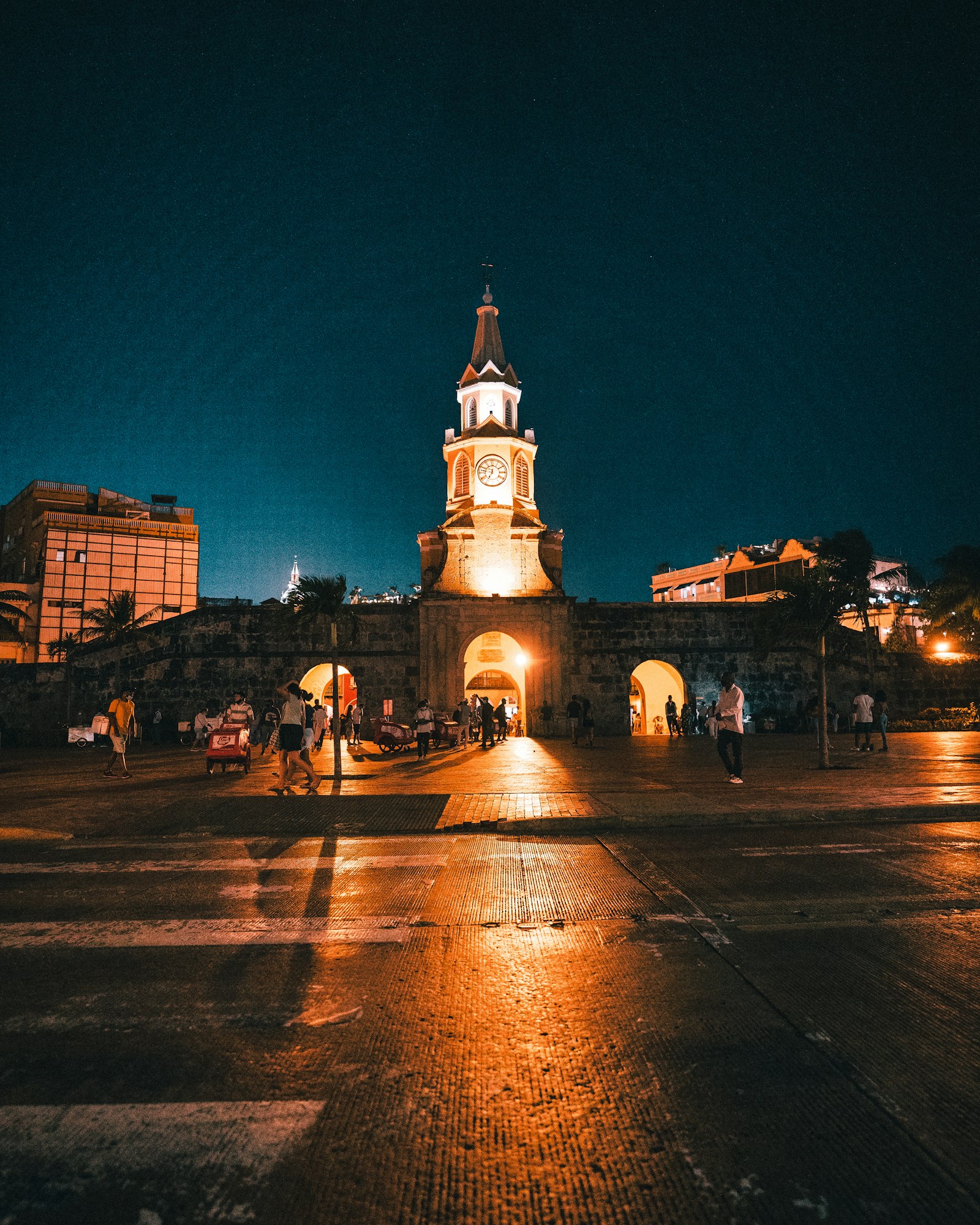
- At night, stick to busy areas (Plaza de Santo Domingo, Calle de la Media Luna in Getsemaní, Plaza de San Diego) and avoid empty stretches of the wall and the quiet streets of La Matuna.
- If you are robbed, don’t resist.
What are the most common scams in Cartagena and how do you avoid them?
Switched menus and price gouging
This is complaint number one. In September 2026, a content creator reported being charged COP 100,000 per piña colada on Bocagrande beach after being quoted COP 45,000: a different menu appeared at payment time. After he reported it, police and the city’s security office got his money refunded. To avoid it: ask for a priced menu before ordering, take a photo of it, confirm whether prices are per item, and never accept “pay what you like.” On the beach, agree on everything (tent, chairs, drinks, massages) before you use it.
If it happens, message Titán Chat, the city’s real-time reporting line, on WhatsApp at +57 304 251 1127, 24/7. Have the venue name, location and photos of the menu and bill ready. For fair price benchmarks, see our Cartagena food prices 2026 table.
Photos with palenqueras and street “gifts”
The palenqueras, the fruit sellers in bright dresses, are part of the city’s soul and partly make a living from photos. Paying them is fair, but agree on the amount before you shoot. Be wary of anyone who slips a bracelet, hat or piece of fruit into your hand “as a gift”: it usually ends with a bill.

Freelance guides, tour touts and pushy vendors
Around Plaza de los Coches and the Clock Tower you’ll be offered island tours, “guides” and souvenirs. A friendly “no, gracias” and keep walking is enough. Book tours with operators that have an office and issue receipts, ask exactly what’s included and whether the port tax is paid separately.
Money exchange and ATMs
Never change money with people on the street. Use ATMs inside banks or malls during the day and cover the keypad. Always check your change in shops and taxis.
Dating apps and spiked drinks
This is the most serious risk. The U.S. Embassy has warned that criminals use dating apps to lure foreigners in Medellín, Cartagena and Bogotá, then drug and rob them. Meet only in busy public places, don’t bring strangers back to your lodging, tell someone your plans and never leave your drink unattended. And with no gray area: the sexual exploitation of minors is a serious crime in Colombia. Colombian immigration and the U.S. Embassy work together to detect and refuse entry to offenders (four refusals in Cartagena between January and April 2026). If you see something suspicious, call 123 or the ICBF child-protection line, 141.
How should you get around: taxi, carriage or on foot?
Taxis: 2026 minimum fare
Cartagena taxis don’t use meters; they charge by zone according to an official table. Under Decree 0051 of 2026, the minimum fare rose to COP 12,250, plus a COP 1,100 night surcharge between 7 p.m. and 5 a.m. Drivers must display the fare card: ask to see it and agree on the price before getting in. Note the license plate and report any abuse. Leaving a restaurant late? Ask staff to call you a cab.
Electric carriages: the new horse-free ride
Horse-drawn carriages have been replaced by 60 electric carriages, running commercially since June 2026 from 9 a.m. to 11 p.m. along approved routes such as the Santo Domingo bastion, Plaza de San Pedro Claver, Parque de Bolívar and Plaza de los Coches. Official low-season rates are COP 170,000 for 30 minutes and COP 300,000 for one hour; in high season, COP 200,000 and COP 350,000. If you’re quoted more, walk away.
On foot: the best option
You can cross the walled city in about 20 minutes. Sidewalks are narrow and cobblestones uneven, so wear comfortable shoes and watch your step at corners. To plan your route, read our complete Cartagena Walled City guide and our walk through its landmark streets.
Are there beaches in Cartagena’s Old Town?
No. In front of the walls, the sea breaks against rocks and breakwaters, and there’s no swimming area. You have three options depending on your time and the kind of beach you want.
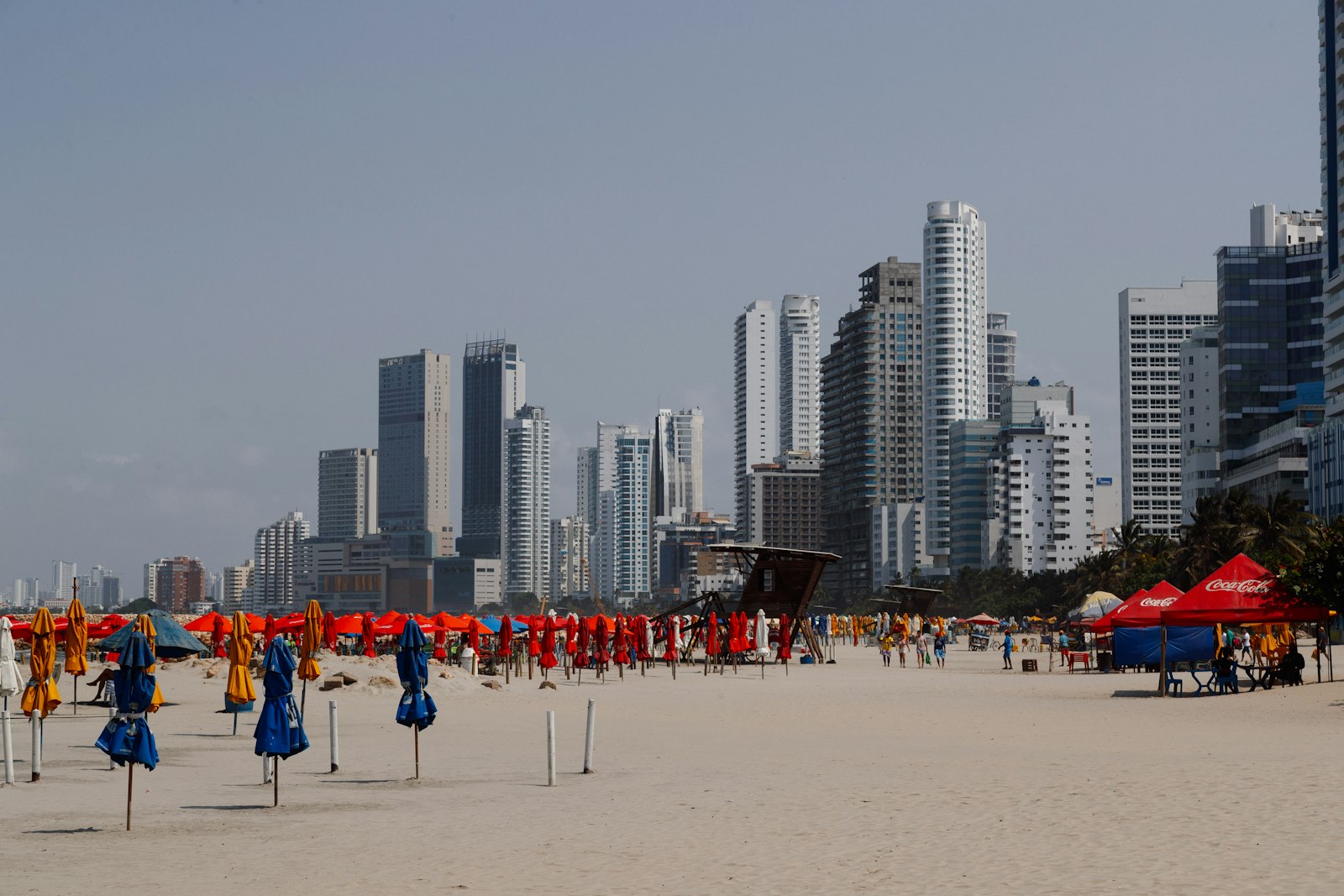 The closest swimmable city beaches are in Bocagrande, about 10 minutes from the Old Town by taxi. Photo: Lucas Chizzali / Unsplash (Unsplash License)
Bocagrande and El Laguito: the most practical
About 10 minutes by taxi, this is the most complete city beach: low to moderate waves between breakwaters, tents, chairs and plenty of vendors. A tent runs about COP 20,000-30,000 per day; negotiate before you sit down. Go early (8-10 a.m.) for fewer crowds and vendors. The water is murkier than on the islands because it sits next to a busy port.
Marbella and El Cabrero: the closest
North of the walls along Avenida Santander, this is the locals’ beach: no tourist infrastructure, just music, families and vendors. It’s great for a walk or sunrise, but afternoon waves can be irregular and, in the rainy season, runoff clouds the water; avoid swimming right after a downpour.
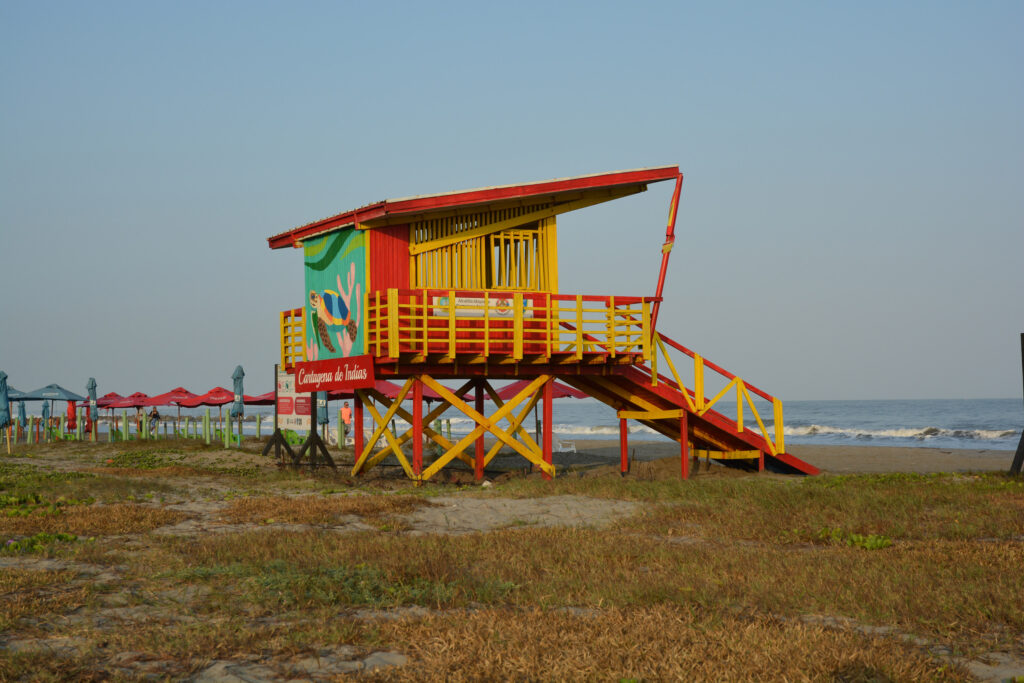
Rosario Islands and Barú: crystal-clear water
For postcard Caribbean water you’ll need a boat, or a drive to Barú. Book with licensed operators and check sea conditions. For a comfortable day, see our guide to the best beach clubs in Cartagena.
| Beach | Distance from the Clock Tower | Water | Vibe | Best for |
|---|---|---|---|---|
| Marbella / El Cabrero | 5 min by taxi | Variable waves; murky after rain | Local, no tourist services | Walks, sunrise |
| Bocagrande / El Laguito | ≈ 10 min by taxi | Calm between breakwaters | Urban, tents and vendors | Families, a quick swim |
| Rosario Islands / Barú | Full-day trip | Crystal clear | Touristy, beach clubs | Snorkeling, postcard beaches |
Golden rules at the beach, according to Cartagena’s fire department and lifeguard corps:
- Swim only in lifeguard-monitored areas and obey the signs.
- Don’t swim near the breakwaters; stay in the middle of the beach.
- Don’t go in the water after drinking, and don’t swim far from shore.
- Watch children at all times and never leave belongings unattended while swimming.
Which parks and plazas should you visit in the Old Town?
The Old Town’s parks are small, but they’re the best refuge from the heat and the place to watch everyday local life. All are free.
Parque de Bolívar
A small, leafy oasis with benches and a statue of Simón Bolívar, framed by the Palace of the Inquisition, the Zenú Gold Museum and the Cathedral. Dancers and musicians often perform at sunset. It’s a perfect rest stop between museums; keep your phone away when crowds gather around the shows.
Parque del Centenario
Opened in 1911 for the centennial of independence, it sits between the walled city and Getsemaní, with an obelisk topped by a bronze condor. Sloths, monkeys, iguanas and birds live in its trees: watch them from a distance, and don’t touch or feed them. Visit by day; at night, just cross it along the lit paths.
Plaza de los Coches and the Clock Tower
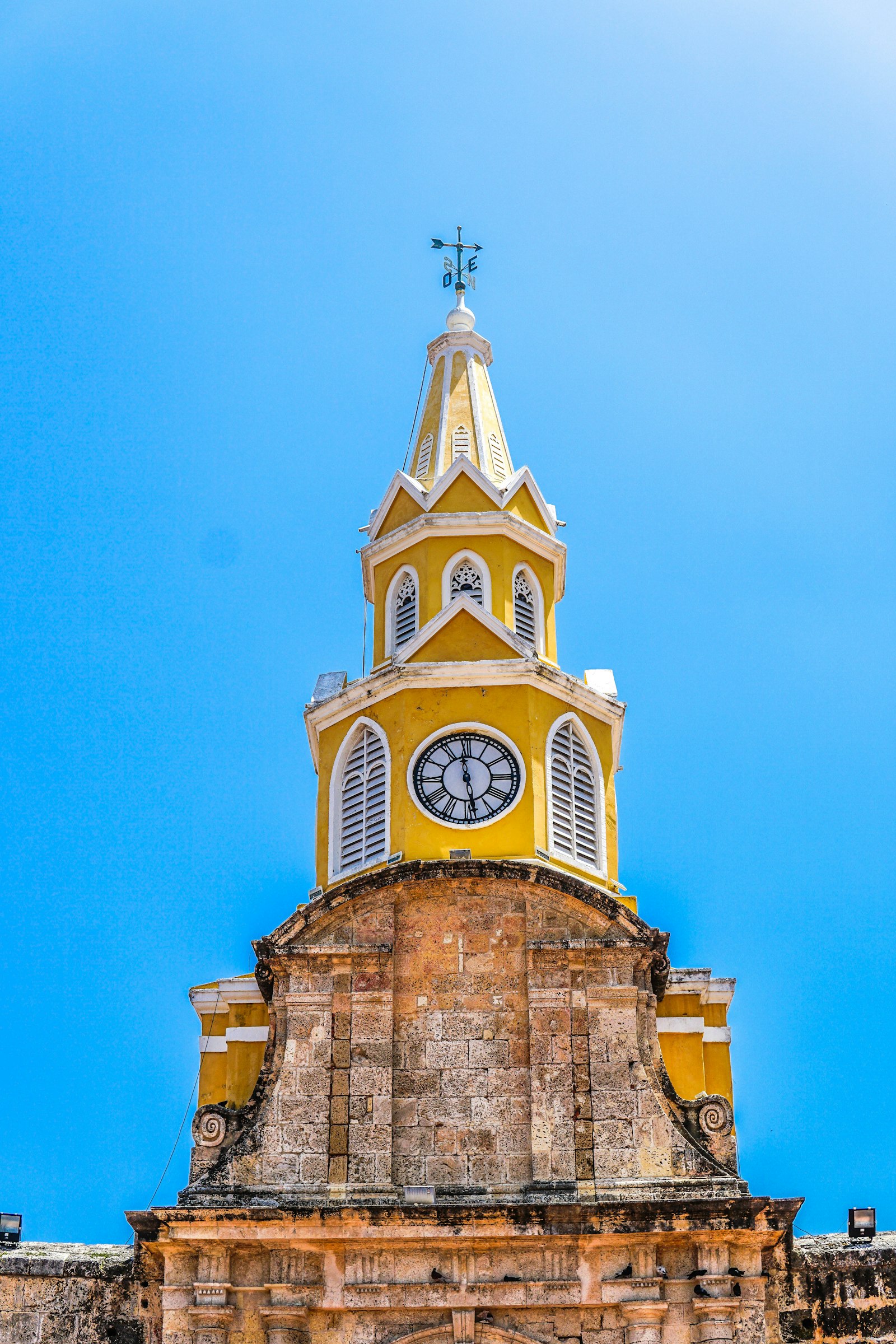
The gateway to the Old Town, with the statue of Pedro de Heredia and the Portal de los Dulces under its arcades. It’s also the plaza with the most vendors and middlemen, so enjoy it with your wallet well tucked away. This is where to try cocadas and alegrías; see our guide to Cartagena’s traditional sweets.
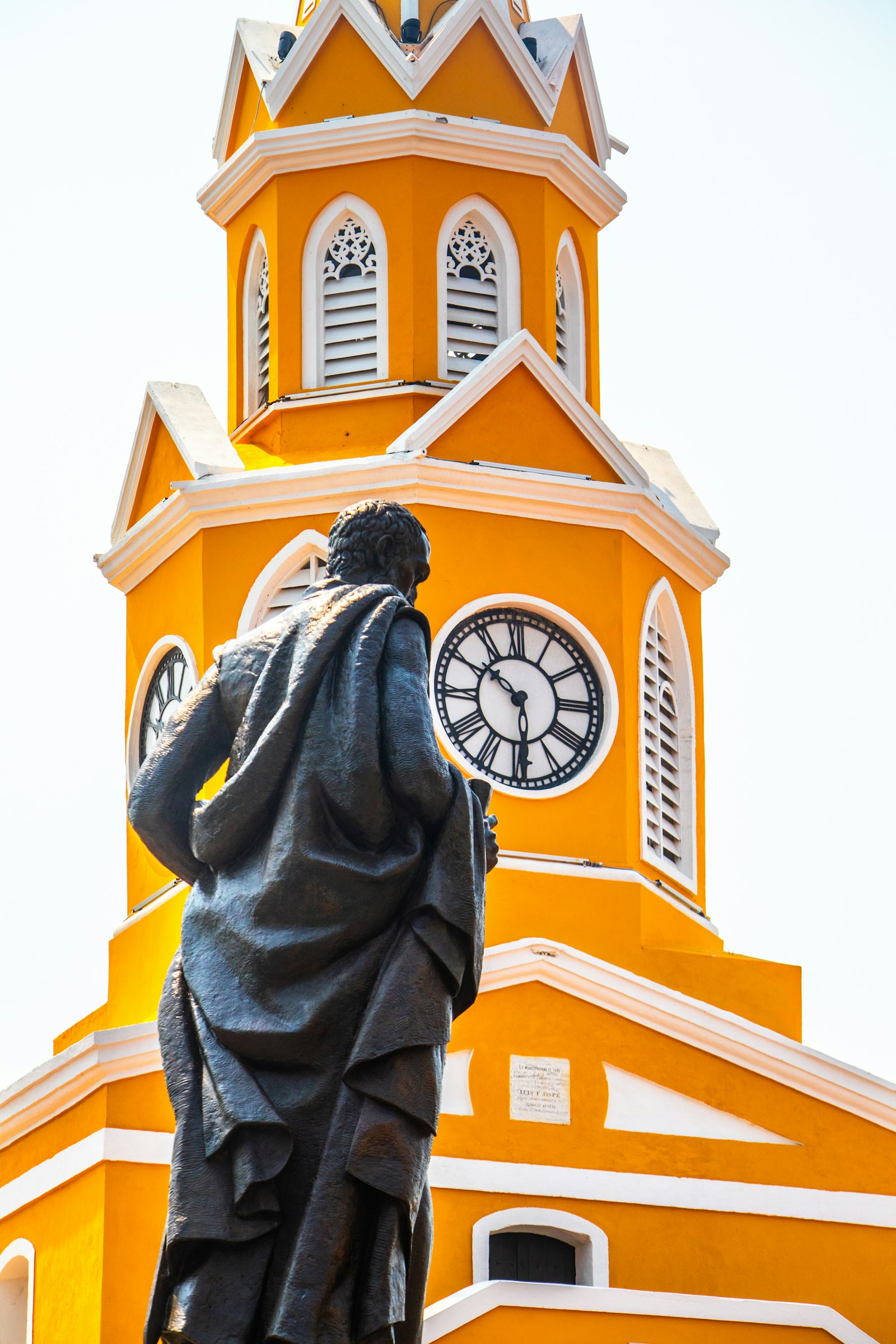
Plaza de San Pedro Claver, Plaza de Santo Domingo and Plaza de San Diego
Three plazas with terraces and life until late. Plaza de San Pedro Claver, next to the sanctuary, features iron sculptures of traditional trades; Plaza de Santo Domingo fills up at night around Botero’s reclining “Gorda”; and Plaza de San Diego, in the San Diego neighborhood a step from Parque Fernández de Madrid, is the calmest for dinner. Eating nearby? Check our list of where to eat in Cartagena’s Old Town.
The city walls at sunset
Walking along the top of the walls is free and it’s the city’s best “park” for watching the sun go down, around 5:45 p.m. in early October. Go up at the Santo Domingo or San Ignacio bastion and come down once it’s dark: the far stretches get deserted.
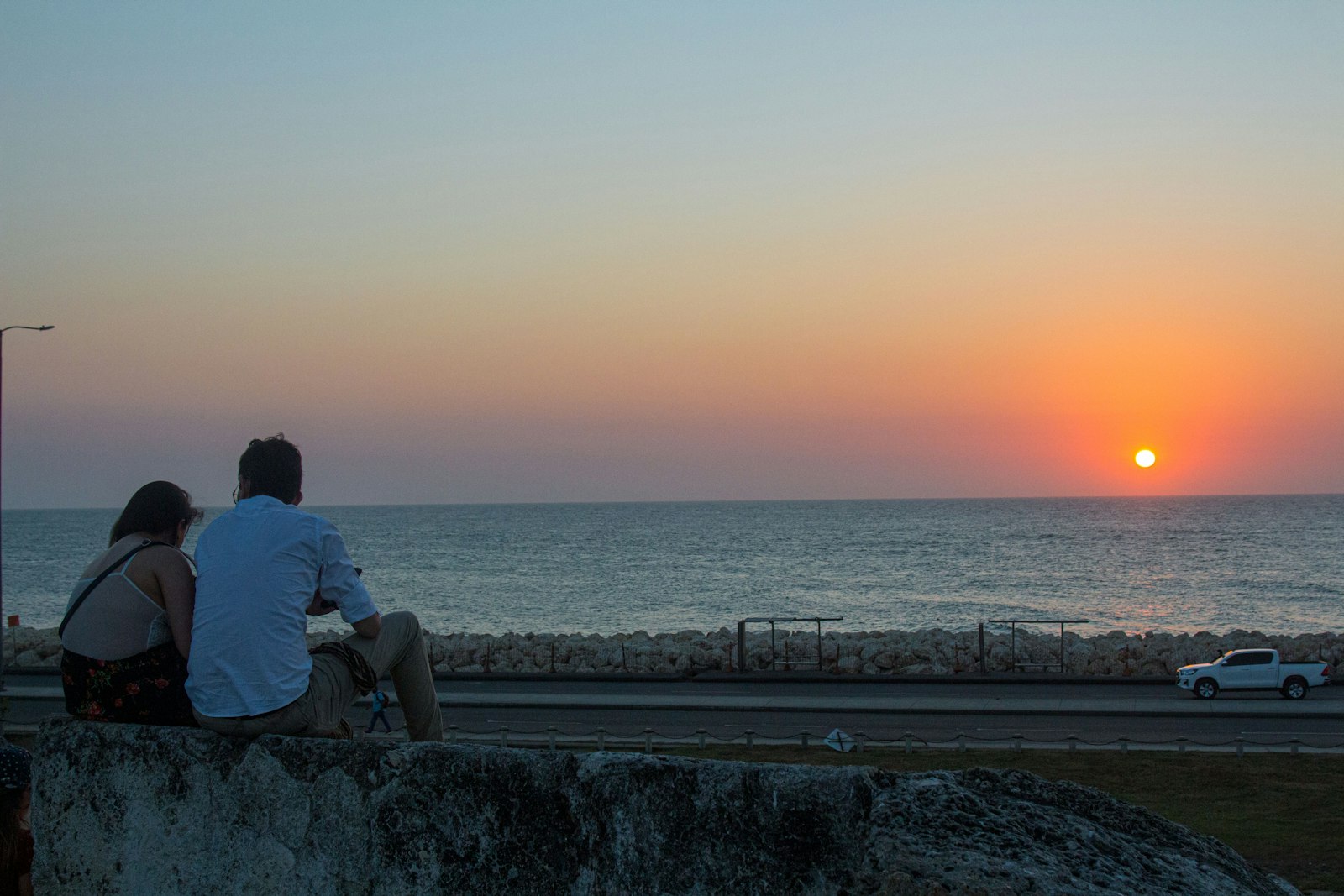
What should you know about heat, rain and opening hours?
- October is the rainiest month: Colombia’s CIOH recorded 316.6 mm of rain in October 2023. Downpours are usually short but heavy and flood streets; carry a compact umbrella and a waterproof phone pouch.
- Heat and sun: walk early or late, drink water often (bottled if you have a sensitive stomach), and wear sunscreen and a hat.
- Beaches: official hours are 8 a.m. to 6 p.m.
- Prices: if a price isn’t displayed, ask before you order.
Which emergency numbers should you save?
| Service | Number |
|---|---|
| Emergency line (police, ambulance) | 123 |
| Fire department | 119 |
| Titán Chat (overcharging, WhatsApp 24/7) | +57 304 251 1127 |
| ICBF (child protection) | 141 |
FAQ: safety and beaches in Cartagena’s Old Town
Is Cartagena’s Old Town safe for tourists?
Yes, it’s the most heavily policed part of the city. The most common risks are phone theft, price gouging and dating-app setups. Watch your belongings, ask prices before ordering and stick to busy streets at night.
Is there a beach in Cartagena’s Old Town?
No. The closest are Marbella and El Cabrero, just north of the walls, and Bocagrande and El Laguito, about 10 minutes by taxi. For crystal-clear water, head to the Rosario Islands or Barú.
How much is a taxi in Cartagena in 2026?
The minimum fare is COP 12,250 under Decree 0051 of 2026, plus a COP 1,100 night surcharge from 7 p.m. to 5 a.m. There are no meters: ask for the fare card and agree on the price before getting in.
How do I report being overcharged in Cartagena?
Message Titán Chat on WhatsApp at +57 304 251 1127, available 24/7, with the venue name, location and photos of the menu and bill. In an emergency, dial 123.
How much is a carriage ride in the Old Town?
Electric carriages charge COP 170,000 for 30 minutes and COP 300,000 for one hour in low season, and COP 200,000 and COP 350,000 in high season. They run from 9 a.m. to 11 p.m.
Can you see wildlife in the Old Town’s parks?
Yes. Sloths, monkeys, iguanas and birds live in Parque del Centenario, between the walled city and Getsemaní. Watch them from a distance and don’t feed them.
Does it rain a lot in Cartagena in October?
Yes, October is usually the rainiest month of the year. Downpours are heavy but short; bring an umbrella and save museums for rainy hours.
Sources
- U.S. Department of State – Colombia Travel Advisory (03/31/2026)
- El Universal – Cartagena taxi fares 2026 (02/27/2026, Spanish)
- El Universal – Overcharged tourist gets refund (09/17/2026, Spanish)
- El Tiempo – Electric carriage fares and hours (2026, Spanish)
- El Universal – Fire department beach safety tips (Spanish)
- El Universal – Cartagena and the U.S. against child exploitation (04/20/2026, Spanish)
- El Universal – October, Cartagena’s rainiest month (CIOH data, Spanish)
- Uber Blog – Parks in Cartagena (Spanish)
- RYO – Parque Centenario
- Nomado Travel – Bocagrande Beach and Playa Marbella


