


Last updated: September 29, 2026
Quick facts
- Location: on the north side of Cartagena Bay, between Getsemaní, Bocagrande and the Caribbean Sea; it includes the San Pedro (Centro), San Diego and La Matuna sectors.
- Getting there: a short taxi ride from Rafael Núñez Airport; from Bocagrande, take a taxi or bus along Avenida Santander. Inside the walls, everything is walkable.
- Best time: 7–10 a.m. for photos without brutal heat, or from 3:30 p.m. to finish on the walls at sunset.
- Approximate budget: walking is free; Gold Museum free; paid museums COP 20,000–28,000 (≈ USD 5–7); horse-drawn carriage ride COP 90,000–240,000 (≈ USD 22–60); street snacks COP 3,500–5,000 (≈ USD 1).
- Time needed: half a day for the essentials; a full day with museums and dinner.
What makes Cartagena’s historic center so special?
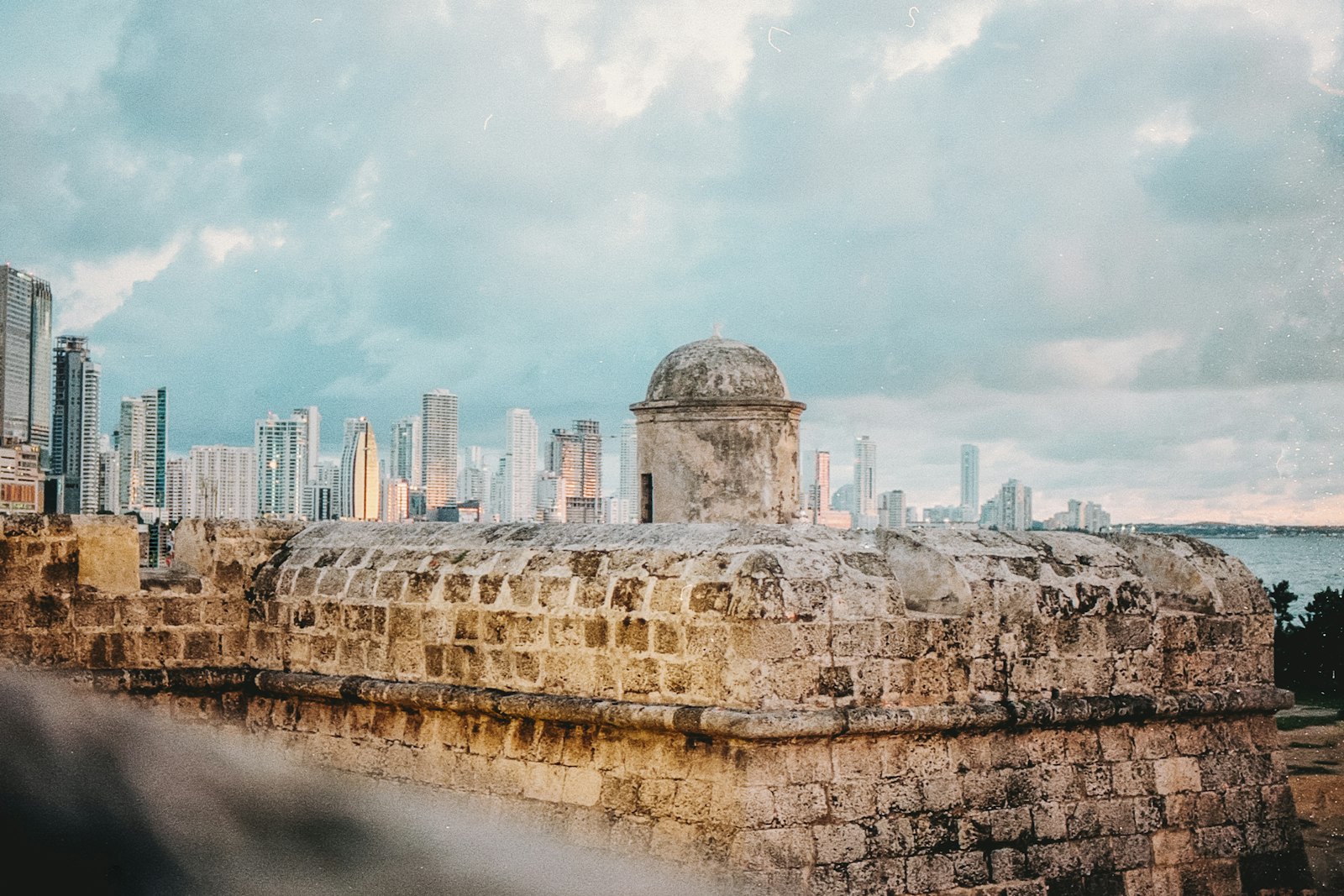
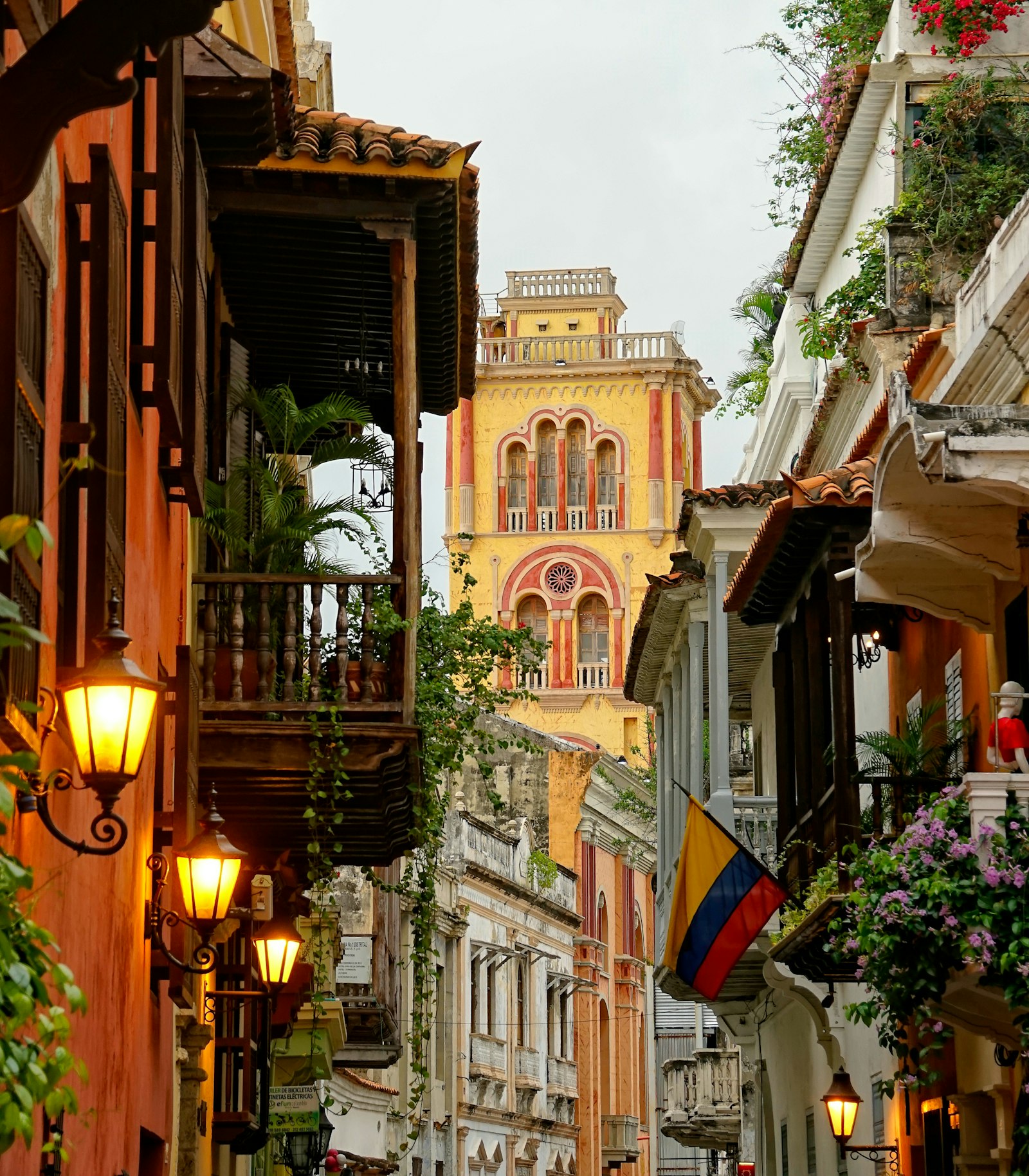
Few cities in the Americas have a colonial core this complete and this alive. Inside roughly 11 km of walls you’ll find more than a hundred streets lined with wooden balconies, bougainvillea spilling down façades, coral-stone churches and squares where, at any hour, someone is playing champeta, selling fresh fruit or walking out of a wedding at the Cathedral. UNESCO listed it in 1984 as the “Port, Fortresses and Group of Monuments, Cartagena” for having the most extensive fortifications in South America.
What makes it unique for travelers is the mix: a museum about the Inquisition in the morning, grilled fish with coconut rice in a 17th-century mansion for lunch, and a sunset cocktail on a bastion. All within a 20-minute walk.
What is the history of the walled city?
Pedro de Heredia founded Cartagena de Indias in 1533, and it quickly became one of the Spanish Empire’s key ports: gold and silver left for Seville, while goods — and, tragically, thousands of enslaved Africans — arrived. That wealth attracted pirates and privateers. Francis Drake’s 1586 raid, with more than 20 ships, pushed the Crown to fortify the city: defensive works began that same year and were expanded through the 18th century.
UNESCO describes three historic districts: San Pedro, home to the elite, the Cathedral and government buildings; San Diego, where merchants and artisans lived; and Getsemaní, the working-class quarter across the bridge. Today San Pedro and San Diego are the tourist heart, while Getsemaní is the bohemian neighbor — see our list of the best 10 restaurants in Getsemaní.
Which buildings and monuments should I visit?
Clock Tower (Torre del Reloj)
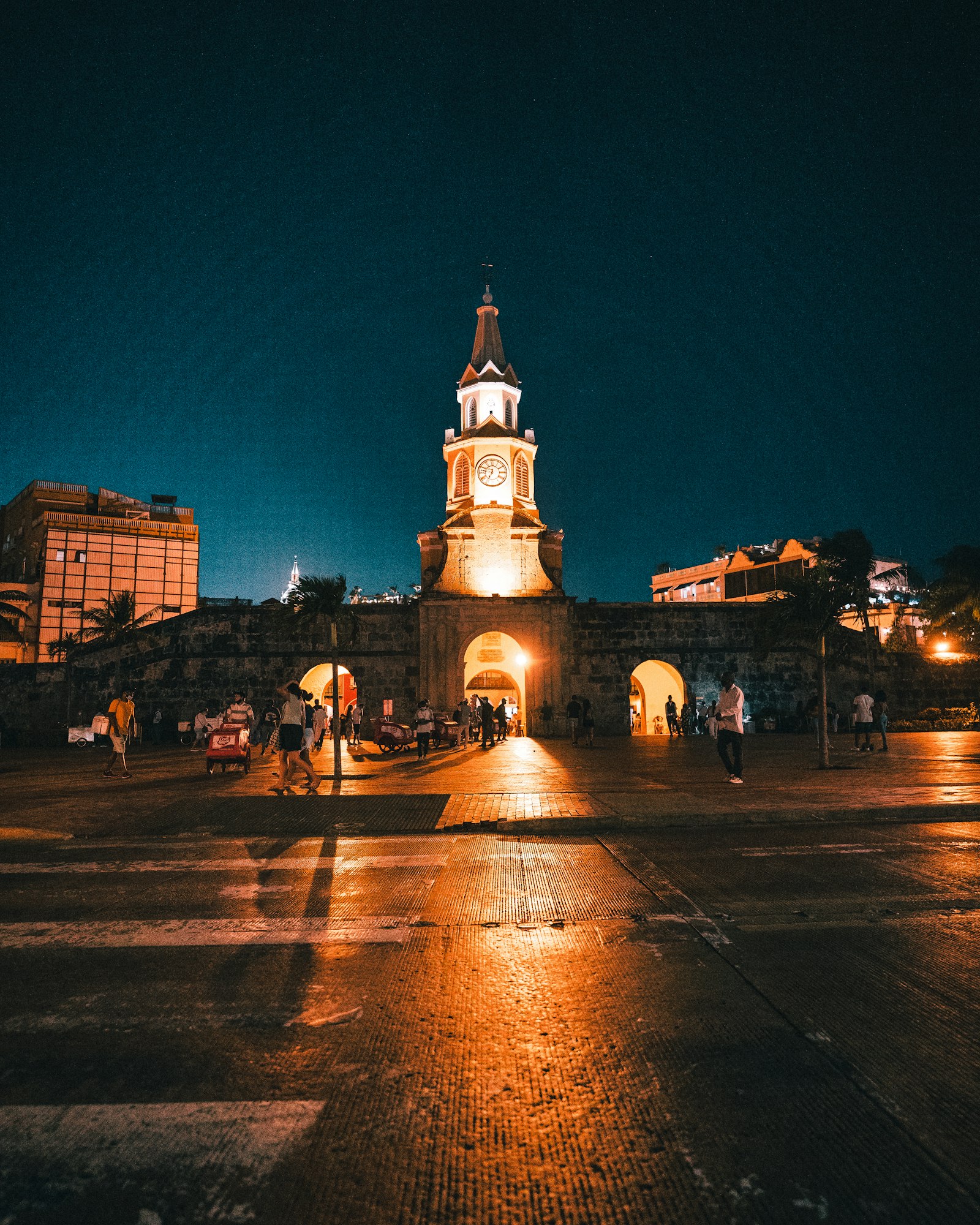
The city’s main gate and the natural starting point. The Puerta del Puente was built in 1631 to connect the walled city with Getsemaní; it was remodeled from 1704 onwards and later crowned with the clock that gives it its name. Walk through its arches into Plaza de los Coches, with the statue of Pedro de Heredia and the Portal de los Dulces, where vendors sell cocadas, alegrías and tamarind sweets.
Cathedral of Santa Catalina de Alejandría
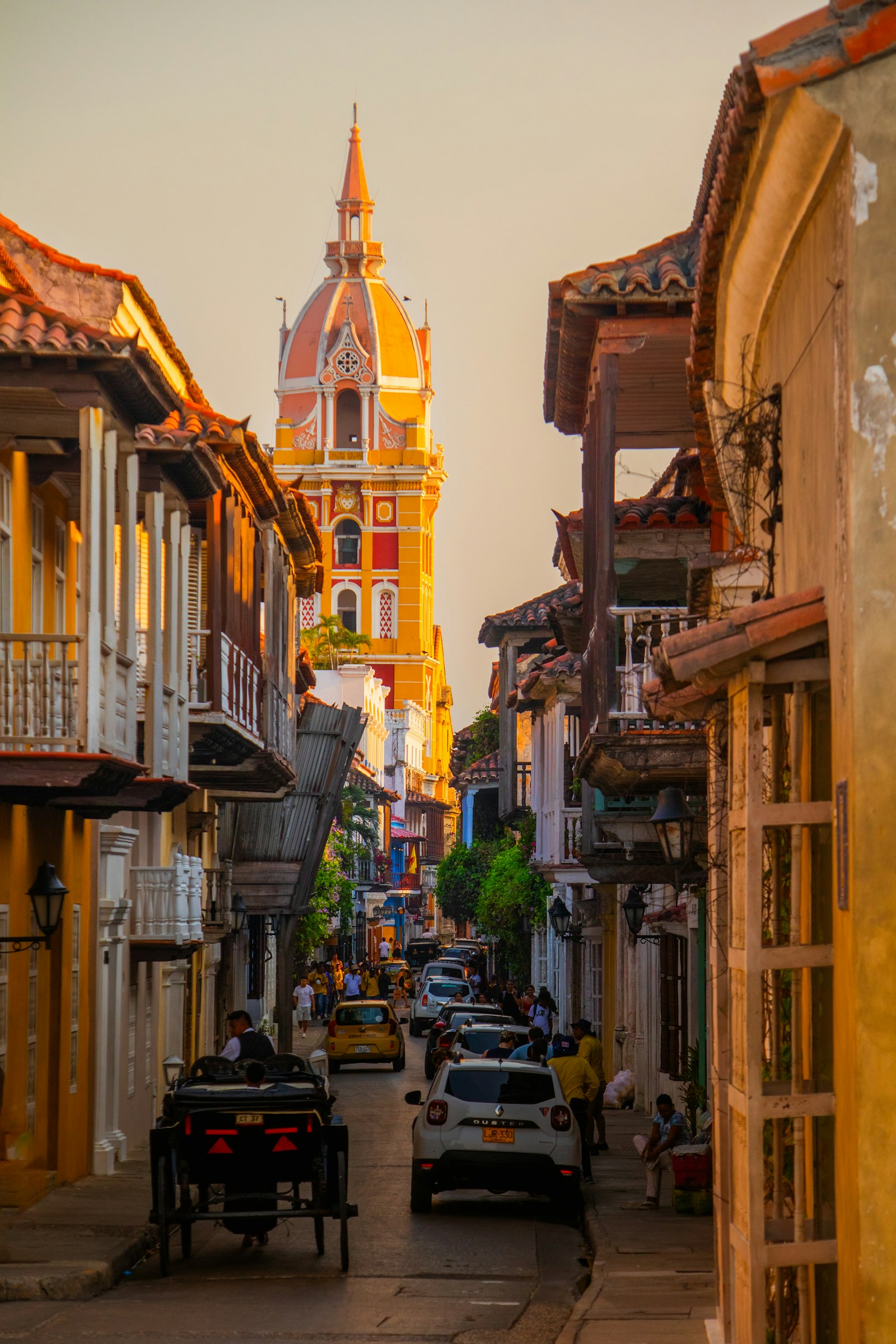
Construction began in 1577; in 1586 one of Drake’s cannonballs brought down several columns, and the church wasn’t finished until 1612. The current bell tower is an early-20th-century redesign by French architect Gastón Lelarge. At night its illuminated dome towers over Plaza de Bolívar. Outside Mass times, tourist visits may carry a fee — ask at the entrance.
Palace of the Inquisition (Cartagena History Museum)
The Holy Office tribunal was established in Cartagena in 1610, and the baroque palace on Plaza de Bolívar was completed in 1770. Today it houses the Museo Histórico de Cartagena, with rooms on the Inquisition, colonial and republican history, and human rights. Look for the “denunciation window” on the side façade. Open Monday–Saturday 9 a.m.–6 p.m. and Sunday 10 a.m.–4 p.m.; adult admission is COP 24,000.
Zenú Gold Museum (Museo del Oro Zenú)
Right across Plaza de Bolívar, Colombia’s central bank displays more than 900 archaeological pieces from the Zenú culture: gold and tumbaga metalwork, ceramics and shell objects. It’s small, air-conditioned and free. Hours: Tuesday–Saturday 9 a.m.–5 p.m., Sunday 9 a.m.–2 p.m.; closed Mondays.
San Pedro Claver Church and Sanctuary
Jesuit priest Pedro Claver devoted his life to caring for enslaved Africans arriving at the port, and his remains rest here. The cloister holds a museum of colonial and Afro-Colombian art, and guided tours can climb the dome. Adult admission for nationals is COP 21,000; international visitors paid COP 28,000 at the last published rate.
The City Walls and Las Bóvedas
Climbing onto the walls is free and the best way to understand the city. Between the Santa Catalina and Santa Clara bastions you’ll find Las Bóvedas, 23 former vaulted military storerooms that now house craft shops. Nearby, the Claustro de La Merced holds the ashes of Gabriel García Márquez.
| Place | Hours | Adult ticket |
|---|---|---|
| History Museum (Palace of the Inquisition) | Mon–Sat 9:00–18:00; Sun 10:00–16:00 | COP 24,000 |
| Zenú Gold Museum | Tue–Sat 9:00–17:00; Sun 9:00–14:00 | Free |
| San Pedro Claver House Museum | Mon–Fri 9:00–16:30; Sat–Sun 10:00–16:00 | COP 21,000 (nationals) |
| Museum of Modern Art (MAMC) | Tue–Fri 11:00–18:00; Sat–Sun 11:00–17:00 | COP 25,000 (international) |
| Caribbean Naval Museum | Daily 10:00–18:00 | COP 24,000 |
What are the main streets and squares?
Walled City streets change name almost every block, and locals still use the colonial names (Calle de las Damas, Calle del Santísimo, Calle de la Factoría), so keep a map on your phone. These squares structure any walk:
- Plaza de la Paz and Plaza de los Coches: by the Clock Tower; the Tourist Assistance Center is here (8 a.m.–6 p.m.).
- Plaza de la Aduana: the largest square, home to City Hall.
- Plaza de San Pedro Claver: with the sanctuary and the Museum of Modern Art.
- Plaza de Bolívar: shade, benches and the two main museums.
- Plaza de Santo Domingo: lively terraces and Fernando Botero’s reclining sculpture.
- Plaza Fernández de Madrid and Plaza de San Diego: quieter, with artists and restaurants.
- Calle San Juan de Dios and Calle Baloco: running parallel to the walls, lined with restored houses and good restaurants.
What are the best things to do in Cartagena’s Old Town?
- Take a walking tour: the classic route — Clock Tower → Plaza de la Aduana → San Pedro Claver → Cathedral → Plaza de Bolívar → Santo Domingo → San Diego → Las Bóvedas — takes about 3 hours.
- Watch the sunset from the walls: start walking around 3:30 p.m. to reach the seaside bastions at golden hour.
- Try street food: raspao (shaved ice), green mango with salt, arepa de huevo and patacón with cheese cost COP 3,500–5,000. Our guide to must-taste dishes in Cartagena explains what each one is.
- Shop for crafts: at Las Bóvedas and the boutiques of San Diego.
- Ride a horse-drawn carriage: prices vary a lot (COP 90,000–240,000 depending on the route); agree on it before getting in.
- Go out at night: squares fill with musicians and terraces; the lit-up Clock Tower is the classic meeting point. For a drink, see the best drinks in Cartagena.
Where to eat in Cartagena’s Old Town?
The historic center concentrates much of Cartagena’s best cooking. Book dinner ahead, especially Thursday to Saturday. For a wider list, see our best restaurants in Cartagena.
| Restaurant | Cuisine | Price | Where | Why go |
|---|---|---|---|---|
| La Vitrola | Caribbean with a Cuban vibe, seafood | $$$$ | Calle Baloco #2-01 | Live music and 1940s atmosphere |
| Carmen | Creative, local produce | $$$$ | Old Town | Colonial mansion with courtyard and terrace |
| El Boliche Cebichería | Ceviche and seafood | $$$ | San Diego | Tiny spot, ceviches with tamarind or coconut |
| Candé | 100% Cartagena cooking | $$$ | Near La Serrezuela | Traditional Colombian Caribbean dishes |
| Celele | Contemporary Caribbean | $$$$ | Getsemaní (5-min walk) | No. 5 on Latin America’s 50 Best 2025 |
La Vitrola
A Calle Baloco classic that channels 1940s Havana, with dark wood and live music. Fish and ceviche are its strengths. It’s always full — book ahead.
Carmen
Chef-driven cooking with modern techniques and local ingredients in a colonial mansion with a romantic courtyard. Perfect for a special night; reserve well in advance.
El Boliche Cebichería
A tiny San Diego spot devoted to ceviches that play with Caribbean flavors like tamarind and coconut, plus excellent grilled octopus.
Candé
It bills itself as “100% Cartagena” cooking: posta negra, fish, seafood and Caribbean stews in an elegant room, at prices somewhat gentler than the area’s fine-dining spots.
Celele (next door, in Getsemaní)
Five minutes’ walk from the Clock Tower, Celele explores the biodiversity of Colombia’s Caribbean and ranked No. 5 on Latin America’s 50 Best Restaurants 2025. If you book just one big dinner, make it this one.
Are there beaches in the Old Town?
No. Although the walls face the sea, there are no swimmable beaches right in front of the Walled City. The closest are Bocagrande and El Laguito, a few minutes away by taxi, and Marbella beach to the north, more local but with strong waves. For clear water, take a boat to Barú or the Rosario Islands — our guide to Cartagena’s best beach clubs will help.
What should I watch out for? Safety, scams and practical tips
- Always ask the price first: there have been widely reported overcharging cases involving carriages, beaches and food. Since 2024 a city decree requires prices to be displayed in pesos with taxes included; if they aren’t posted, don’t order.
- Report quickly: the city responds to alerts through “Titán Chat” and at the Tourist Assistance Centers.
- Pushy vendors: a firm “no, gracias” is enough. Don’t accept “free” bracelets or photos with palenqueras without agreeing on a price.
- Taxis: there are no meters; fares work by zones. Agree on the fare before getting in or ask your hotel to call one.
- Heat and rain: bring sunscreen, a hat and water. October is usually the rainiest month: downpours are heavy but short.
- Valuables: in busy squares keep your phone away and use a cross-body bag; at night stick to busier streets.
- Opening times: many museums close on Mondays, and top restaurants open in two shifts (lunch and dinner).
Cartagena Old Town FAQ
How much time do I need for Cartagena’s Walled City?
Half a day covers the essentials on foot; with museums, shopping and dinner, give it a full day.
Is it safe to walk around the Old Town at night?
The main squares and streets are busy and patrolled. Take basic precautions: don’t flash valuables and avoid empty streets very late.
Are there free museums in the Old Town?
Yes: the Zenú Gold Museum on Plaza de Bolívar is free. Walking the walls and the squares costs nothing either.
What is the best time of day to visit?
Early morning (before 10 a.m.) or from 3:30 p.m., to avoid the heat and end with sunset on the walls.
Is there a beach in the historic center?
No. The nearest beaches are Bocagrande and El Laguito, a few minutes by taxi, and Marbella to the north.
How much is a horse-drawn carriage ride?
According to El Universal, between COP 90,000 and 240,000 depending on length and route. Agree on price and route before you get in.
Sources
- UNESCO – Port, Fortresses and Group of Monuments, Cartagena
- El Universal – Cartagena museum route 2026 (Spanish)
- El Universal – Old Town walking tour (Spanish)
- Banco de la República – Zenú Gold Museum
- Portafolio – Anti-scam plan for tourists (Spanish)
- El Universal – October, the rainiest month (Spanish)
- Bloomberg Línea – Latin America’s 50 Best Restaurants 2025


