


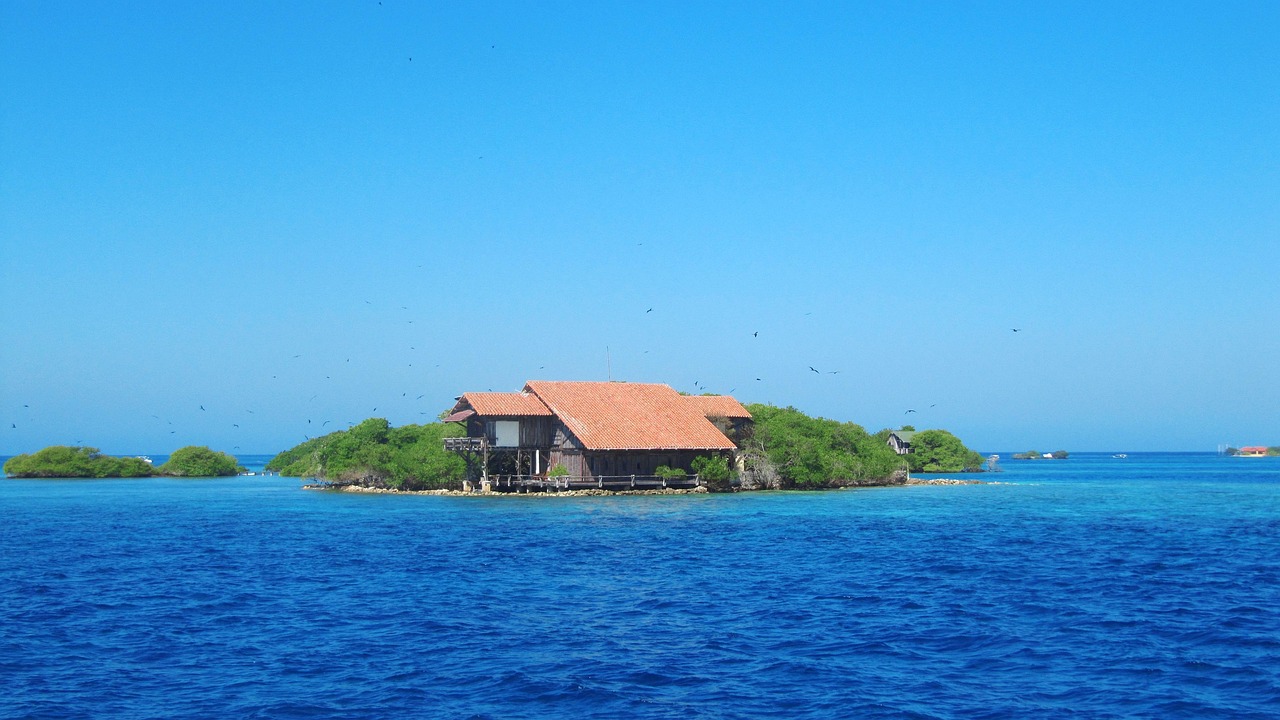
The Rosario Islands (Islas del Rosario) are an archipelago of about 27 coral islands roughly 35 km southwest of Cartagena, inside a national marine park. Boats leave from Muelle La Bodeguita and take 45-90 minutes. The highlights: reef snorkeling, Isla Grande and its glowing-plankton lagoon, and a beach day for about 58-102 USD.
Last updated: October 20, 2026. Prices and rules were checked against the sources listed at the end; confirm them with your operator before you sail, since they change by season.
Quick facts
- Location: Caribbean Sea, about 35 km southwest of Cartagena, in the Corales del Rosario y de San Bernardo National Natural Park.
- Getting there: speedboat or catamaran from Muelle La Bodeguita, next to the Clock Tower (45 minutes to 1 hour 30 minutes).
- Best time: leave between 8:00 and 9:30 a.m.; the sea is usually calmer in the morning.
- Budget: 185,000-325,000 COP (58-102 USD) per person on a shared boat including fees; beach-club day passes from about 79 USD.
- Time needed: a full day; one or two nights on Isla Grande if you want to see the plankton.
What are the Rosario Islands and what makes them special?
They are small coral islands, almost all privately owned, surrounded by reefs, seagrass beds and mangroves. Since 1977 they have been part of a protected area now called Corales del Rosario y de San Bernardo National Natural Park: it was created by Agreement 026 that year, expanded in 1987 to include Isla del Rosario and Isla Tesoro, and given its current name in 1996, according to the park’s management plan.
What makes them special is the water more than the sand: clear, shallow water with marine life a few meters from shore. Think of the trip as a sea day (snorkeling, kayaking, swimming) rather than a long-beach day, which you’ll find on Barú instead.
What is the history of the Rosario Islands?
For centuries the islands were the domain of fishermen and coconut farmers from the Black communities around Barú. According to community history reported by El Espectador, in 1851, when slavery was abolished in New Granada, five freed people bought seven caballerías of mangrove land on Barú and chose to own it collectively, for all families. The community of Orika, the only village on Isla Grande, descends from that story.
Over time a coconut blight, dynamite fishing and reef decline hit the local economy, and many islands were bought by private owners who built vacation homes. In 2012 Colombia’s Constitutional Court recognized Orika’s collective land title, the first for an Afro-Colombian community on the country’s Caribbean islands, under Law 70. Today its community council represents about 300 families and focuses on ecotourism and mangrove planting.
Which islands should I visit?
Isla Grande
The largest island in the archipelago, with the most hotels, restaurants and local life. There are no cars: you can walk its sandy trails in a few hours. It’s home to Orika, the Laguna Encantada (bioluminescent plankton at night), small beaches such as Playa Libre and Playa Dulce, and hotels like San Pedro de Majagua. If you spend just one night outside Cartagena, make it here.
San Martín de Pajarales (Oceanarium)
This island hosts the Oceanario Islas del Rosario, a regular tour stop. Entry costs about 40,000 COP for adults and 30,000 COP for children aged 2 to 10, boat not included (El Universal, April 2026). There are shark feedings and dolphin shows; if you’d rather avoid captive animals, choose a reef snorkeling trip instead.
Isla del Pirata
A small island with white sand, crystal-clear water and a barrier reef sheltering its shore. It runs its own day passes (from about 82 USD in May 2026, per Cartagena Day Tours) and is a good pick if you want snorkeling without crowds.
Isla del Encanto and Isla Bela
Two islands built around the all-sorted day pass: beach, shade, lunch and, at Isla del Encanto, a pool. Isla del Encanto is a family favorite; Isla Bela is usually the cheapest way into this kind of plan.
Cholón and Agua Azul (next to Barú)
Cholón is a shallow lagoon by Barú where dozens of boats raft up with loud music: it’s the party option, not the nature one. Many “5 islands” tours include it. If you go, read the safety section: accidents between swimmers and boats have been reported there.
What is there to do in the Rosario Islands?
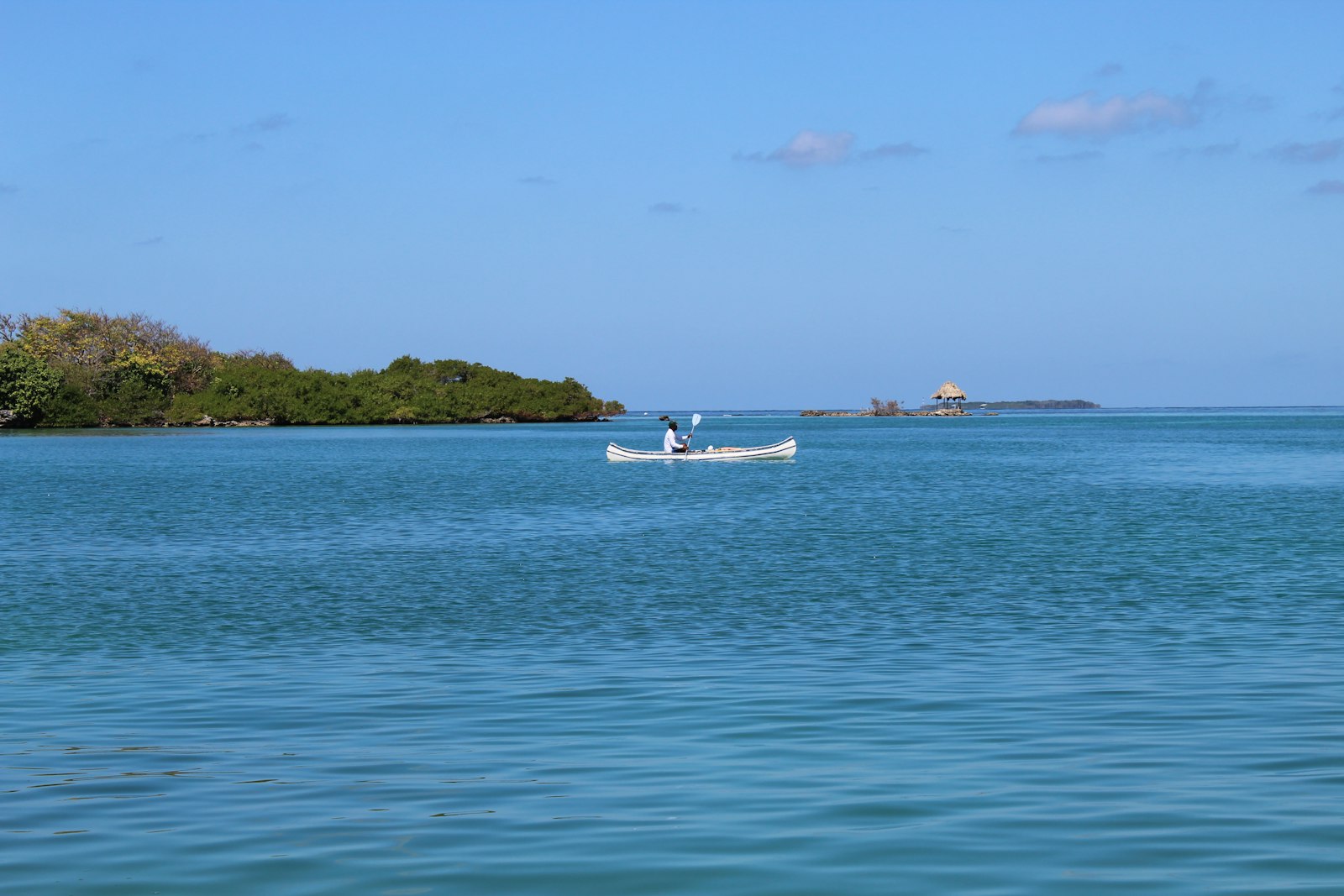
- Snorkel at La Piscina: a calm, shallow area off Isla Grande, ideal for beginners.
- See the “Pablo Escobar plane”: a small sunken plane near Isla Naval, between Isla Grande and Isleta, visible from the surface. There is no credible evidence it was Escobar’s: sources point to its use as an artificial reef in a 1994 marine biology study.
- Swim with bioluminescent plankton: in Isla Grande’s Laguna Encantada at night. It’s best during a new moon; island hotels arrange the outing.
- Kayak or SUP through the mangroves: many Isla Grande hotels rent gear; travel guides put it around 20,000 COP, but check current rates.
- Scuba diving: San Pedro de Majagua has a PADI dive center with courses and snorkel trips.
- Walk through Orika: crafts, small shops and home cooking; some evenings there’s music.
Are there beaches in the Rosario Islands?
Yes, but they’re small and most belong to hotels or beach clubs, where access comes with a day pass or a purchase. On Isla Grande, Playa Libre is the most accessible public beach, with shade and clear water; get there early, before the groups. Playa Dulce, also on Isla Grande, is quiet and good for snorkeling. Isla Arena, a sandbar barely above sea level, is a common stop on private boat trips. For a long beach, the nearest is Playa Blanca on Barú, though vendors there can be very pushy.
Which landmarks will I see along the way?
There’s no colonial architecture like in the Historic Center, but the route has landmarks worth knowing:
- Bocachica forts: leaving the bay, your boat passes through the Bocachica channel, guarded by the 18th-century forts of San Fernando and San José.
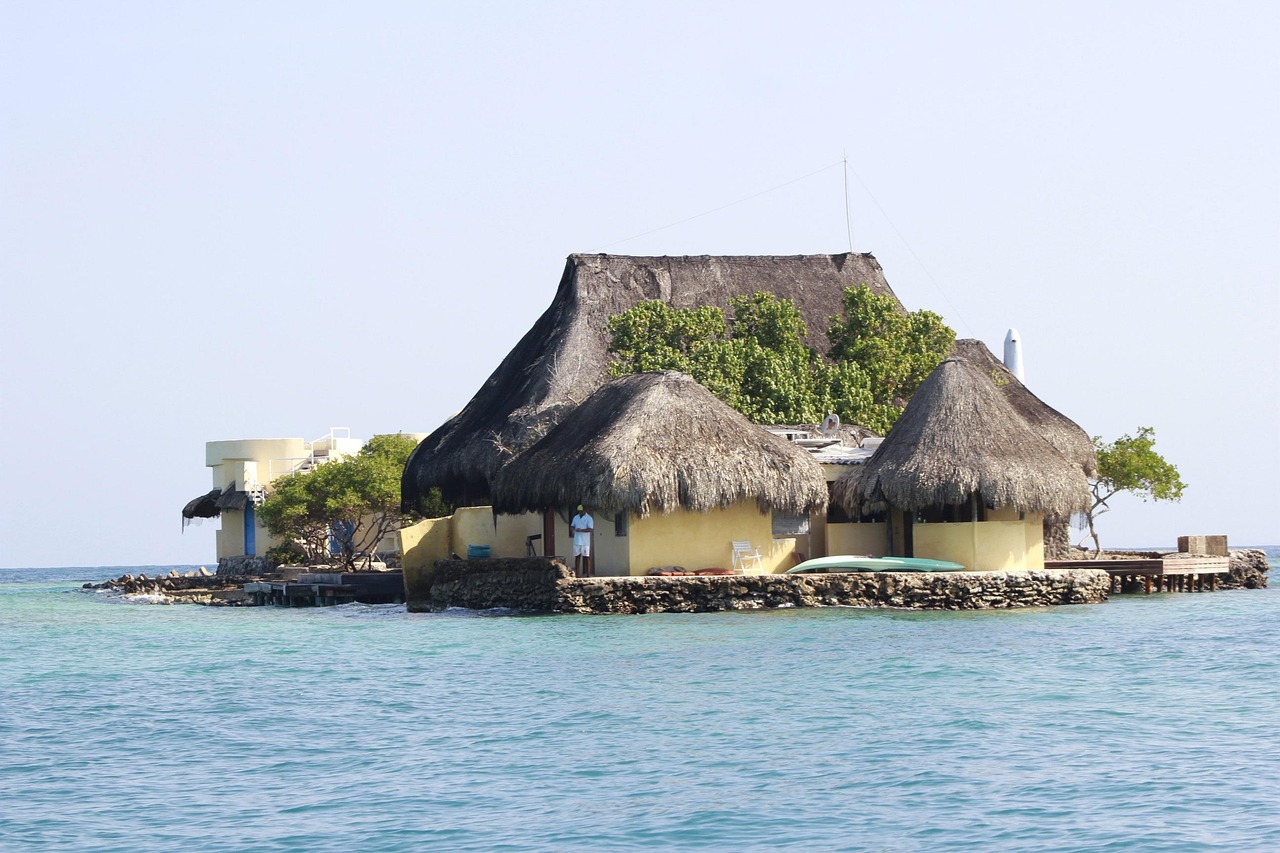
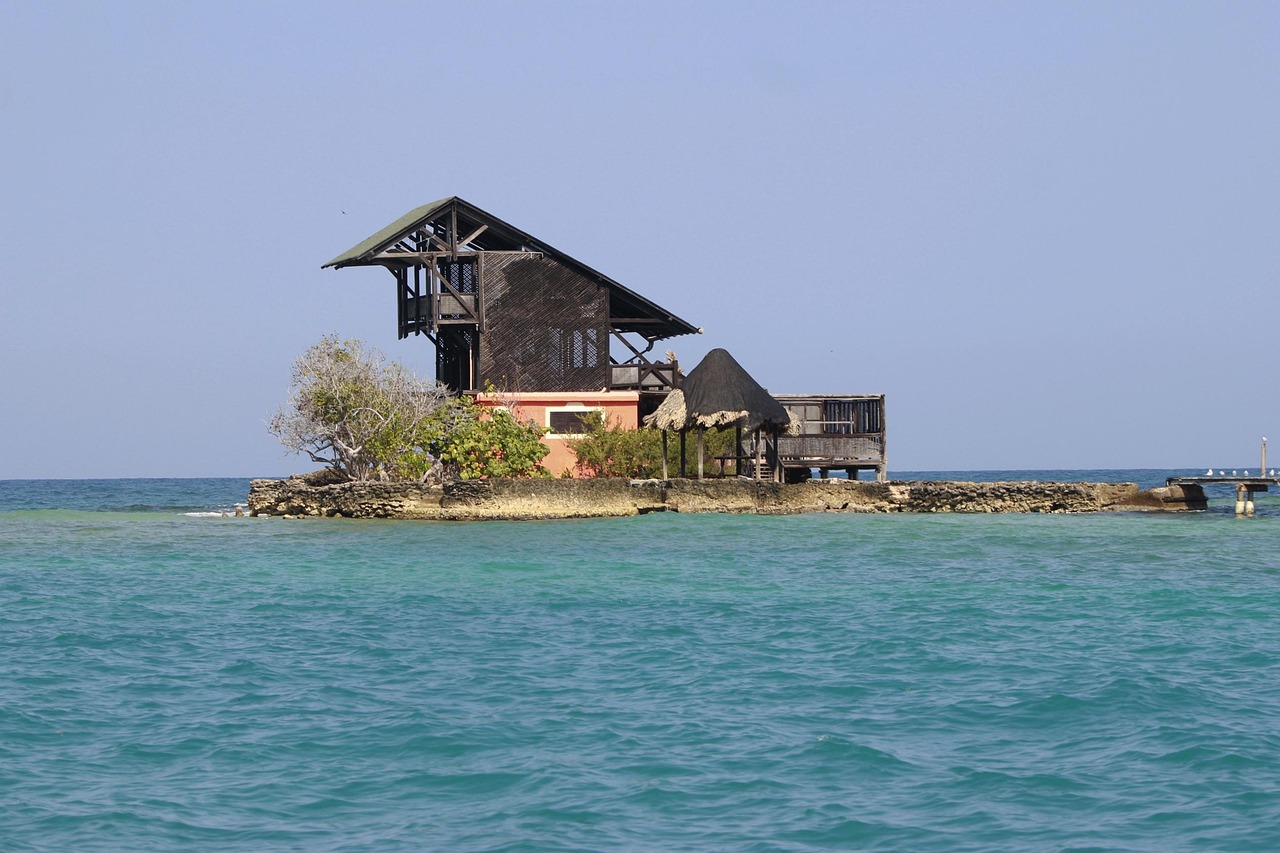
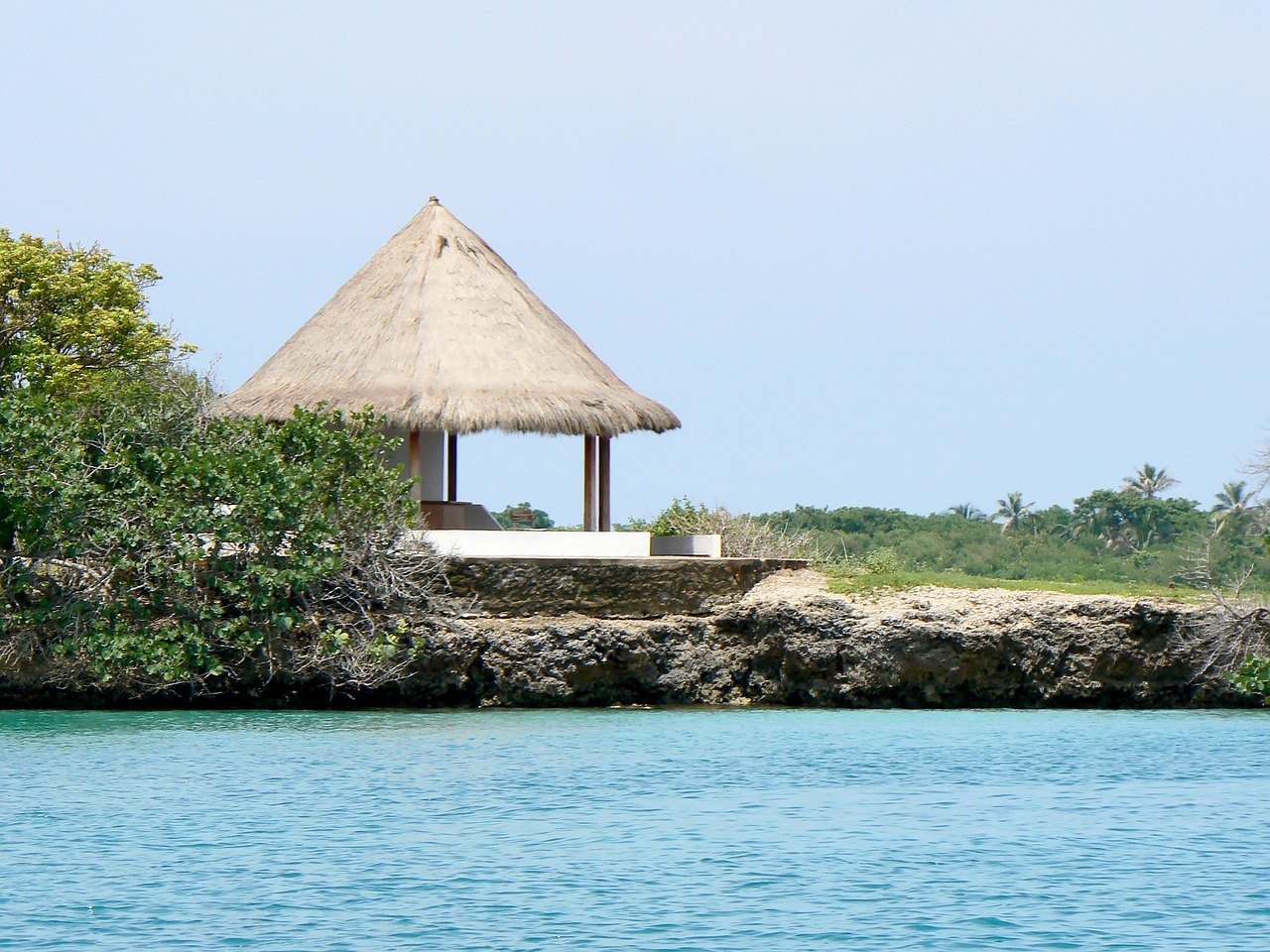
- Houses on the water: private villas built on islets and stilts, the archipelago’s classic postcard.
- The “Escobar mansion”: a large abandoned building on Isla Grande that many attribute to the drug lord. Ownership is unverified; treat it as local legend.
- Hotel San Pedro de Majagua: according to its trade listing, it grew from the spot where French painter Pierre Daguet decided to settle in 1995; today it has 17 rooms under large rubber trees.
What are the main streets?
There are no streets or cars. On Isla Grande you’ll walk sandy trails between the mangroves, hotels and Orika; on the other islands, piers and paths inside each club or hotel. Bring water shoes: some stretches are dead coral and rock.
Where can I eat in the Rosario Islands?
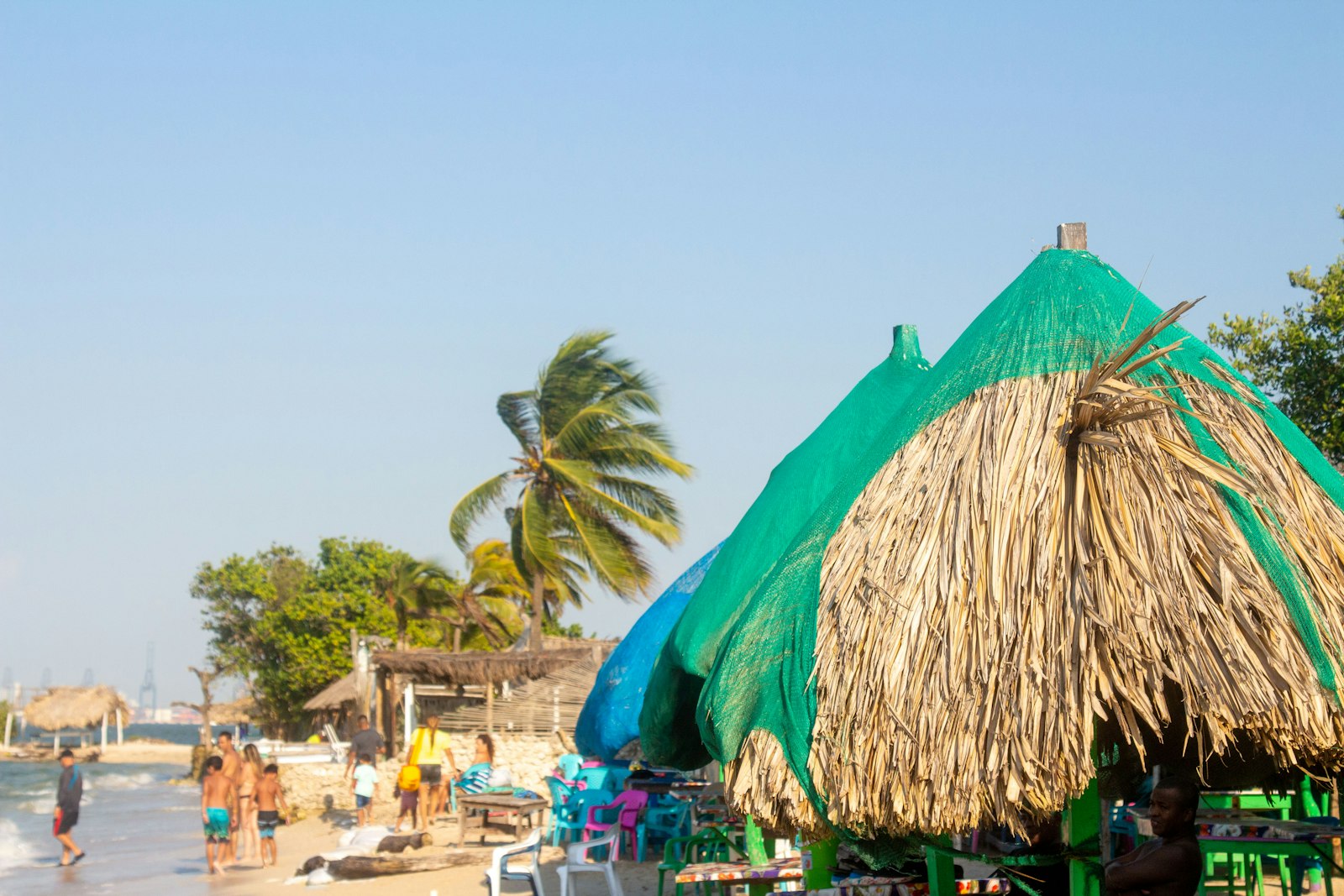
There are almost no standalone restaurants: you eat at the club or hotel included in your day pass, usually fried fish, coconut rice and patacones. Lobster and red snapper normally cost extra. In Orika you’ll find simple home cooking, and canoes come by selling cold drinks and fresh lobster. Tripadvisor has very few reviews of these clubs, so we don’t use them as a ranking; the table compares prices published by an operator in May 2026. For more options, see our Cartagena beach clubs guide.
| Place | Island | Day pass from (USD) | Food | Why go |
|---|---|---|---|---|
| San Pedro de Majagua | Isla Grande | 124 (child 82) | Seafood and international | Two beaches, reef snorkeling, capped capacity, no pier fee |
| Pao Pao Beach Club | Rosario Islands | 109 (ages 12+) | Lunch and drinks | Laid-back, mangrove kayaking and snorkel routes |
| Bora Bora Beach Club | Isla Grande | 109 (VIP 139) | Check what’s included | Adults only, DJ and party vibe |
| Isla del Encanto | Isla del Encanto | 114 | Buffet or à la carte | Pool and wide beach, great for families |
| Cocoa Beach Club | Rosario Islands | 115 | Lunch with five options | Newer facilities, kayaks and paddleboards |
| Isla del Pirata | Isla del Pirata | 82 (open bar 115) | Lunch | Natural, uncrowded, good snorkeling |
| Isla Bela | Isla Bela | 79 (open bar 129) | Caribbean lunch | Cheapest beach-club day pass |
Back in the city, continue with our list of the best restaurants in Cartagena.
How do I get there and how much does it cost in 2026?
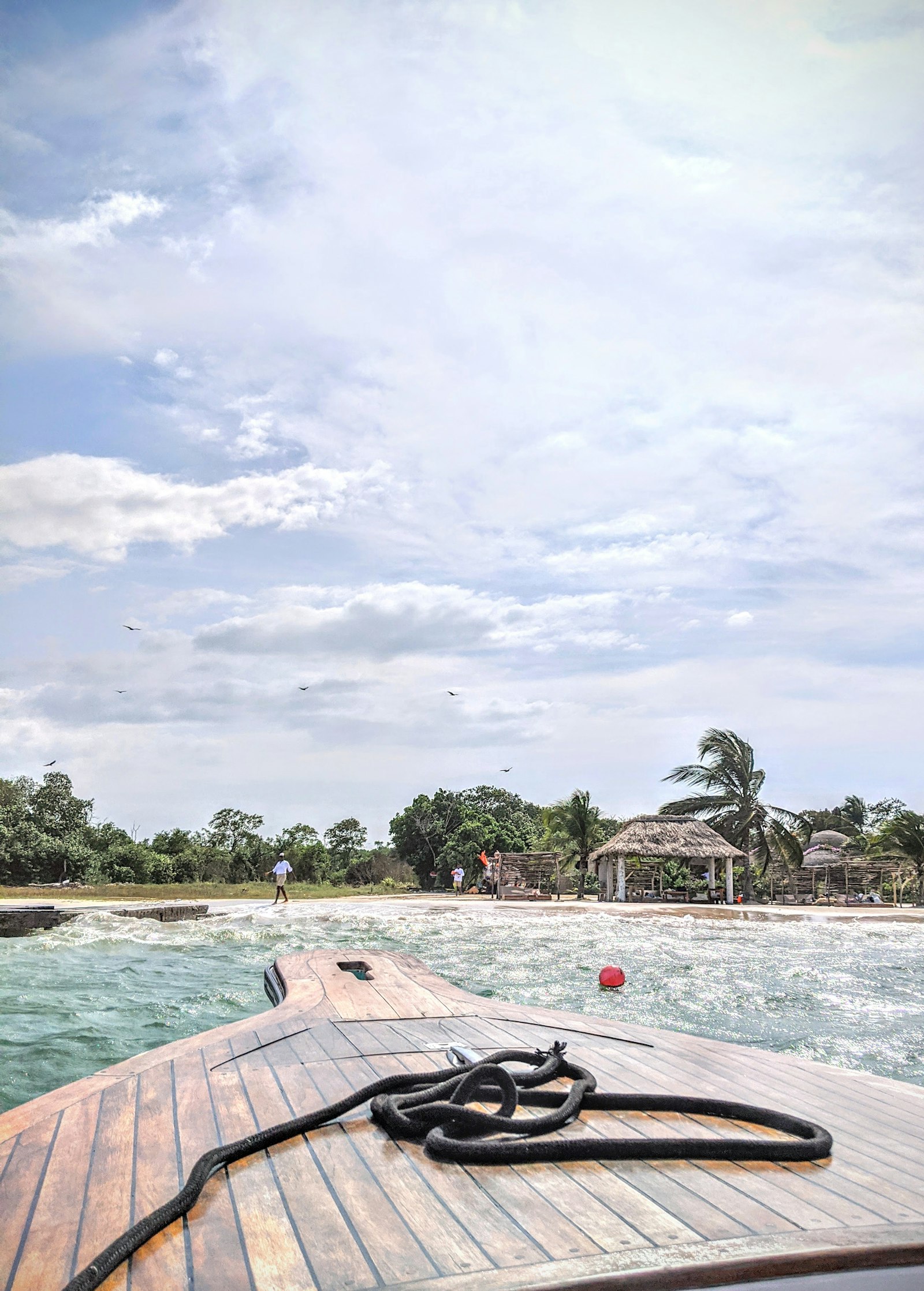
According to Dimar, Colombia’s maritime authority, Muelle La Bodeguita is the authorized pier for commercial passenger boats to the islands. It sits between the Old Town and Getsemaní. Operators ask you to arrive between 8:00 and 8:45 a.m., leave around 9:00-9:30 and return between 1:30 and 3:00 p.m. You have four options: shared boat, multi-island tour, a club or hotel day pass, or a private boat (with five or more people it can cost about the same per person as a good day pass).
| Item | COP | Approx. USD | Source |
|---|---|---|---|
| Shared round-trip boat to Isla Grande | 130,000-230,000 | 41-73 | CTG Life Travelers |
| Pier departure fee (over 90 cm tall, cash) | 31,500 | 10 | Local operators, 2026 |
| Mandatory park insurance | 8,300 | 2.6 | Local operators |
| National park entry (Rosario sector) | 13,500 | 4.3 | Vanguardia, 2026 rates |
| Oceanarium (adult / child 2-10) | 40,000 / 30,000 | 12.6 / 9.5 | El Universal, April 2026 |
| Hotel-to-pier transfer (optional) | 20,000 | 6.3 | tur.com |
Note on the park fee: Vanguardia lists 13,500 COP for the Rosario sector and 11,000 COP for San Bernardo, while some guides quote 11,000 COP across the board. Carry cash in small bills for fees and tips.
Is it worth spending the night on the islands?
Yes, if you have five or more days in Cartagena and it’s not your first or last night of the trip. Sleeping on Isla Grande lets you see the plankton, swim before the day boats arrive and explore Orika at a slower pace. There are no truly cheap hotels: the budget options are hostels and simple cabins, sometimes away from the beach. Bring insect repellent.
What should I watch out for?
- Cheap street tours: they often use small, crowded boats, charge extra for chairs and snorkel gear and leave out fees. Book with agencies holding a valid National Tourism Registry (RNT) number and ask for photos of the boat.
- Hidden charges: at beach clubs some loungers and VIP areas cost extra; at Cholón and Playa Blanca a card surcharge is common.
- Mandatory insurance: Colombia’s National Parks require an accident-assistance policy (Resolution 273 of 2024) to enter the park and Barú. Without it you can’t land.
- Life jackets and overloading: insist on a life jacket for every passenger and never board an overloaded boat.
- Swimmers and boats: at Cholón stay inside the swimming area; serious boat accidents have happened there.
- Weather: October and November are the rainy season; storms usually arrive in the afternoon. If the Port Authority suspends departures, don’t look for alternative boats.
- Sun and reef: wear a shirt for snorkeling, plus sunscreen, a cap and water. Don’t touch or stand on coral.
- Holidays and festivals: November’s long weekends pack the pier; check the 2026 Independence Festivities schedule before booking.
- Emergencies at sea: Navy line 146. Back in town, follow our guide Is Cartagena safe?
What’s new: in September 2026 the mayor’s office and National Parks announced a Pro-Islands Committee to control departures from every marina, not just La Bodeguita, and to mark the reefs with buoys and signs. The new rules were still being designed when this guide was written.
Frequently asked questions
How much does a Rosario Islands trip cost in 2026?
On a shared boat, with pier fee, insurance and park entry, 185,000-285,000 COP per person (about 58-90 USD); with the Oceanarium, up to about 325,000 COP. Beach-club day passes run from about 79 to 124 USD.
Which is the best of the Rosario Islands?
For an overnight stay and local life, Isla Grande. For quiet snorkeling, Isla del Pirata. For families who want a pool, Isla del Encanto. For partying, Cholón, next to Barú.
Where can I see the glowing plankton?
In Isla Grande’s Laguna Encantada, at night. It shows best during a new moon, so you’ll need to stay on the island or book a night tour.
Did the sunken plane belong to Pablo Escobar?
There’s no credible evidence. The plane lies near Isla Naval and, according to available sources, was used as an artificial reef in a 1994 marine biology study.
Is insurance mandatory to visit the islands?
Yes. National Parks require it to land in the Corales del Rosario y de San Bernardo park and on Barú. Operators charge it at the pier (about 8,300 COP in 2026).
Rosario Islands or Playa Blanca?
The Rosario Islands are better for snorkeling and clear water; Playa Blanca on Barú for a long beach. Playa Blanca is often crowded, with pushy vendors.
Sources
- Parques Nacionales: Corales del Rosario y de San Bernardo management plan
- El Espectador: the story of the Orika Community Council
- Dimar: La Bodeguita, authorized pier to the islands
- El Universal: new boat departure controls (Sep 28, 2026)
- El Universal: mandatory insurance in the Rosario Islands (Jan 14, 2026)
- El Universal: Oceanario Islas del Rosario (Apr 4, 2026)
- El Universal: the Cholón tragedy (Jun 3, 2024)
- Vanguardia: 2026 national park fees
- Cartagena Day Tours: Rosario Islands beach clubs (May 1, 2026)
- Cartagena Explorer: practical Rosario Islands guide (Apr 25, 2026)
- Cartagena Explorer: the sunken plane in the Rosario Islands
- National Geographic Traveller: Cartagena’s secret islands (Aug 20, 2026)
- Gecko Routes: things to do on Isla Grande
- Ladatco: Hotel San Pedro de Majagua listing
- CTG Life Travelers: Isla Grande transport and 2026 fees
- tur.com: Isla del Encanto day pass
- Portafolio: official exchange rate, October 16, 2026


